























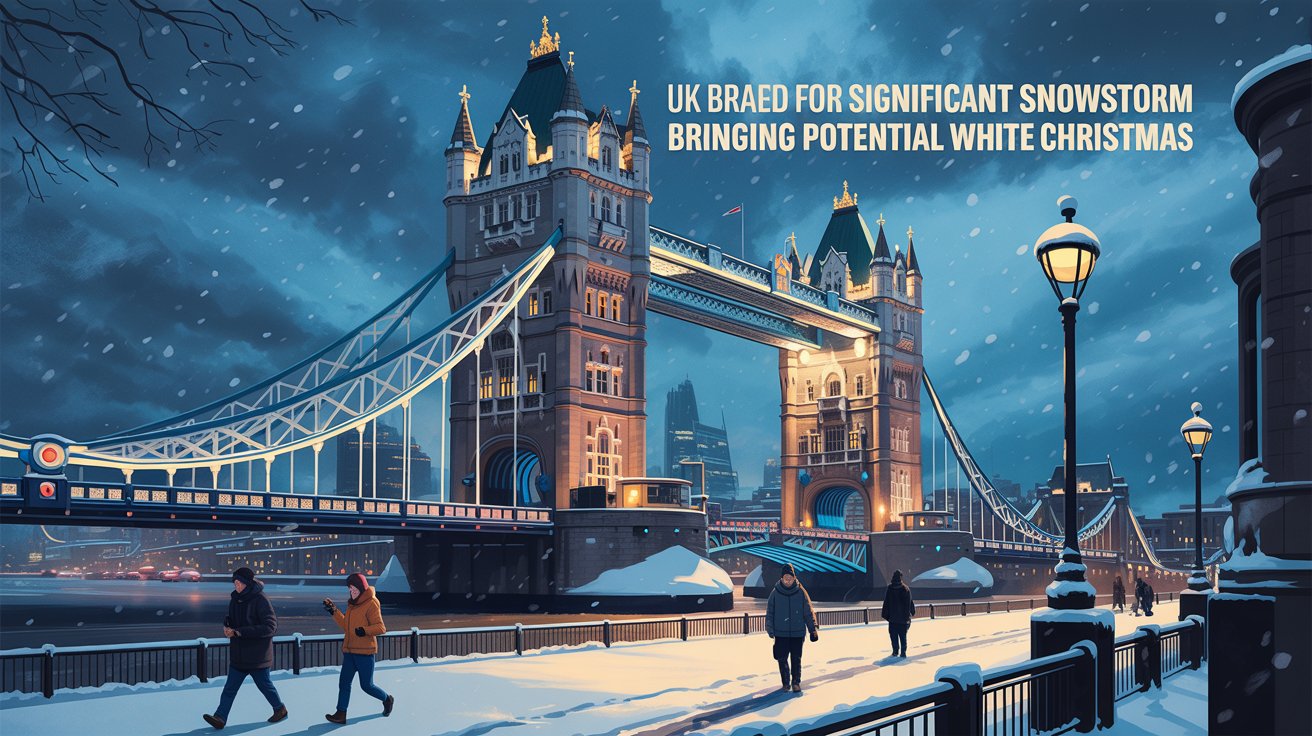
Quick summary: The headline UK Braced For Significant Snowstorm Bringing Potential White Christmas is already circulating in the press. Right now forecasters say a wintry pattern could develop later this season that raises the chances of snow in parts of the country — but official confirmation for a “white Christmas” comes only very close to the date. Keep an eye on Met Office updates within five days of Christmas for the best picture.
What the headline actually means
“UK Braced For Significant Snowstorm Bringing Potential White Christmas” signals two things: first, meteorologists see a cold pulse or Arctic blast that could produce wide snowfall; second, there’s talk that this event might overlap the holiday period, giving some areas a chance of a white Christmas.
This is an early-season warning rather than a guarantee. Forecasts that talk about holiday weather this far ahead often change as models update. The Met Office says forecasts for specific days become reliable about five days before the event.
How the Met Office defines a “white Christmas”
- The Met Office’s official rule is simple: a single snowflake observed falling anywhere in the 24 hours of 25 December counts as a white Christmas. That’s the standard used for records.
- That definition means “white Christmas” does not require deep, lasting snow on the ground — even a brief fall observed by an official station will do.
- Because of that definition, forecasts and headlines can sound more optimistic than they feel on the ground — a dusting on a hilltop qualifies the same as heavy snow in a town.
What forecasters are saying right now
- Short-term: the UK has seen an active storm season recently (for example, named storms and strong systems earlier in the season), which demonstrates the atmosphere’s readiness to produce rapid changes. This background matters when meteorologists spot an Arctic feed that could interact with moist Atlantic air.
- Medium-term: official agencies and trustworthy outlets caution that early signals give only a hint — meteorological models can shift the track and timing of cold pulses or snow-bearing fronts. Treat anything beyond a week as provisional.
- Bottom line from experts: there is a window of opportunity later this winter for snow to reach lower ground, especially if a northerly or easterly pattern develops — but whether that aligns exactly with 25 December remains uncertain.
The realistic odds: why a white Christmas is rare for many areas
- Climatology shows wide variation: northern high ground and parts of Scotland have the best odds; lowland England and Wales see far fewer true white Christmases. Recent seasonal data shows milder-than-average winters are still common.
- Real-life analogy: think of a coin toss controlled by temperature — if a few degrees warmer cling to the air, snow turns to sleet or rain. A tiny shift in temperature can change everything. Meteorologists watch that narrow margin as Christmas approaches.
- Practical note: some Christmases are declared ‘white’ in Scotland while southern England basks in above-average temperatures. Headlines that promise a nationwide snow blanket often overstate the geographic reach.
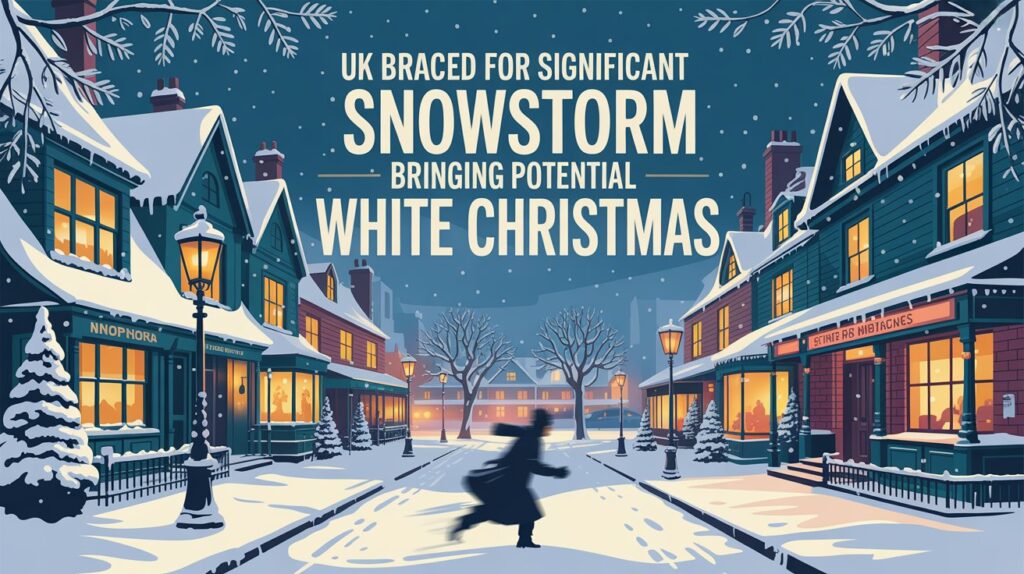
What to expect if the UK Braced For Significant Snowstorm Bringing Potential White Christmas scenario plays out
- Widespread travel disruption is the most likely impact if heavy snow moves across transport corridors: airports, ferry routes, and trains can face delays and cancellations. If the storm is intense and prolonged, roads (especially A-roads and rural lanes) can become hazardous.
- Localized power outages and fallen trees happen in heavier, wetter snow or when snow arrives alongside strong winds. That combination increases risk to infrastructure and services.
- Schools and workplaces: closures or late starts become possible in affected counties. Businesses that rely on deliveries should prepare contingency plans for delays.
- Health and welfare: frail or elderly people face higher cold-related risks; communities and local services commonly ask neighbours to check on vulnerable people during heavy wintry spells.
Simple, practical preparation checklist
If you live in an area that might be affected:
- Stock a day or two of essentials (food, medication, baby supplies) — not panic buying, just one or two days’ cushion.
- Keep your phone charged, and have a battery pack if you rely on power for medical devices.
- Prepare your car: keep antifreeze topped up, check tyres, and store an ice scraper, blanket, and small shovel.
- Plan travel early: consider whether you can move journeys to avoid the peak of the storm. If not, travel daylight-only and let others know your route.
- Check local council and transport pages for live updates before heading out — they’ll post service cancellations first.
Travel and commuting: what commuters should watch for
- Airports: heavy snow can close runways or force cancellations; check your airline before leaving for the airport and consider travel insurance for holiday flights.
- Trains: icy rails and points failures cause delays; if you must travel by train, expect slower services where snow risk is highest.
- Roads: gritters run in priority routes, but secondary roads may remain untreated longer — avoid rural short-cuts if possible.
- Analogy: treat a heavy snow forecast like a football match with variable referee decisions — one bad call (a warm air surge) can turn a white-ticket day into a damp one. Play it safe and flexible.
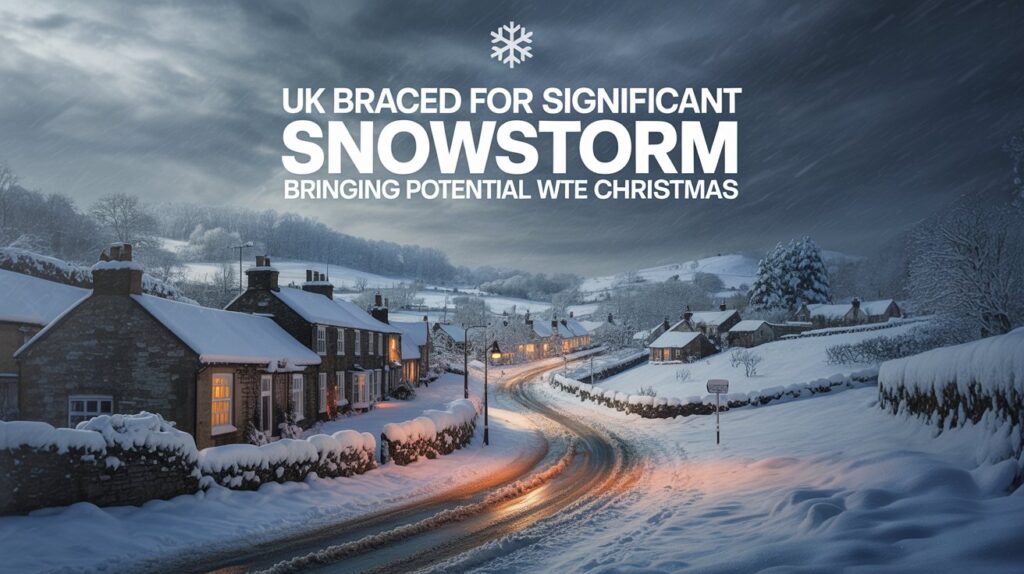
How long will forecasts hold? Timing and accuracy
- Meteorologists can give increasingly accurate guidance from about five days ahead for a specific day like Christmas; long-range signals give hints but not certainties. This means any claims today about an exact Christmas snow outcome should be taken as early guidance, not final.
- Keep a watch on official Met Office bulletins and major national broadcasters as December approaches — that’s when the picture will sharpen.
Climate context: why Christmas snow is changing
- Warmer winters overall make heavy, widespread snow less likely across much of lowland Britain. That said, jet-stream swings and Arctic outbreaks still create sudden windows for significant snow — hence the ups and downs in recent years.
- Real quote to keep you grounded: “Weather can surprise us — but the trend is towards milder winters.” That captures why meteorologists avoid long-range certainties and why local forecasts matter most as we get closer to the date.
If we do get snow near Christmas: community and business impacts
- Retail and delivery: shops may see both footfall boosts in town centres (people enjoying the scene) and logistic slowdowns (deliveries delayed). Businesses that rely on last-mile deliveries should prepare short-notice rerouting.
- Emergency services: expect higher demand for ambulances and search/rescue in rural areas. Local councils may open warming centres if power or heating fails.
- Community spirit: in many places, neighbours and local volunteers help clear paths and check on those who can’t get out — snow often brings both disruption and solidarity.
If you’re interested in holistic recovery and wellness during cold seasons, read our feature on Kialodenzydaisis Healing — a fascinating approach that explores how natural balance supports both body and mind through changing climates.
Final takeaways — clear, human, and direct
- Headline reality: UK Braced For Significant Snowstorm Bringing Potential White Christmas is a clickable and plausible scenario, but it is not yet a forecastible guarantee for all of the UK.
- What matters now: watch official Met Office forecasts and local authority warnings as Christmas approaches; those updates are the reliable, actionable sources. If you live in a higher-risk zone (northern and upland areas), make modest preparations now.
- Practical motto: “Plan, don’t panic; check five days out, then check again.” That puts you in the best position to enjoy a festive season — whether it’s snowy or mild.
Powerful closing quote (inline): “A snowflake can make a Christmas ‘white’ by the book — but only careful planning will make your Christmas peaceful if the snow does arrive.” — from the practical side of weather preparedness.
For readers curious about grammar and style nuances, check out our quick guide on why “Lake Texoma Should Be Capitalized” — it explains how proper nouns like famous lakes should always retain capitalization in headlines and professional writing.