





















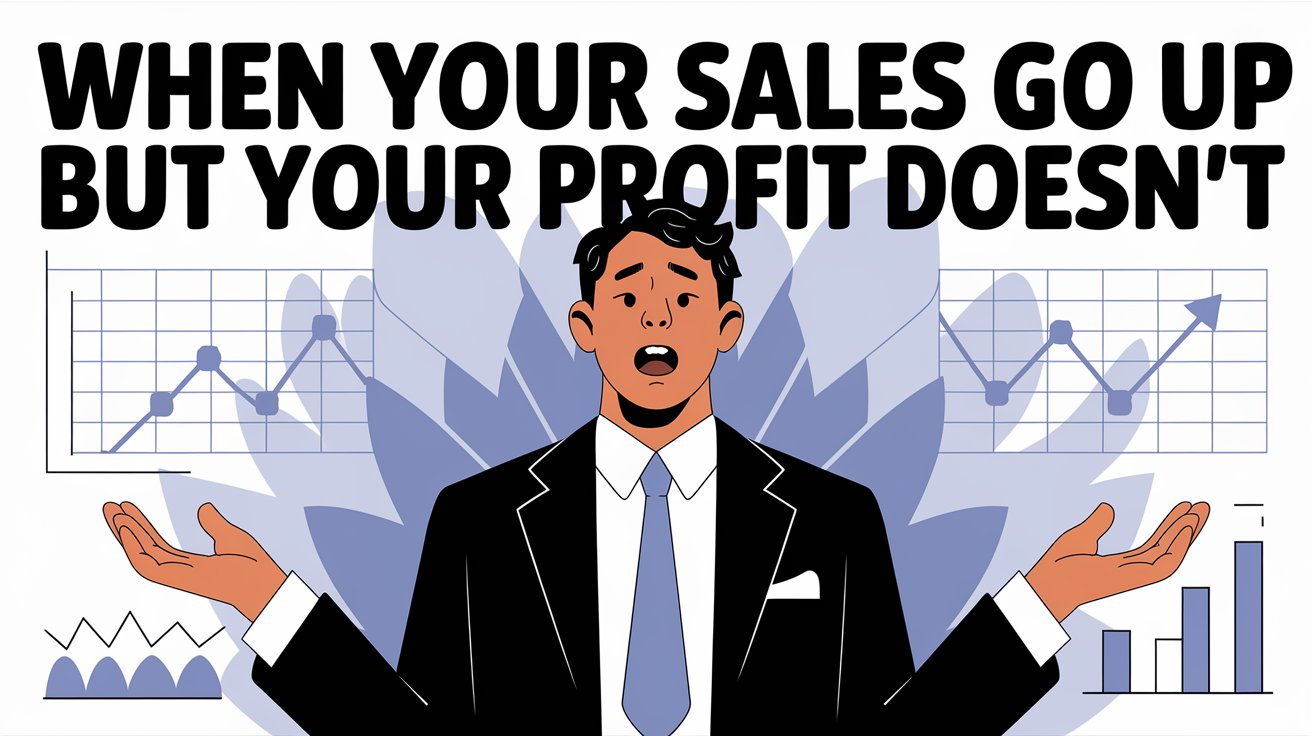
It sounds like good news at first. Your sales are growing. More people are placing orders, more stuff is moving, and it seems like things are finally taking off.
But then you check the numbers. And your profit? Barely moving. Or worse—it’s dropping.
That doesn’t really make sense at first. You’re doing more business, so shouldn’t you be making more money? Not always. And in transport and delivery, this kind of thing happens a lot. The work gets busier, but things behind the scenes don’t keep up.
So, what’s going on?
More Orders Can Also Mean More Problems
Getting more orders sounds exciting. But if you don’t have good systems in place, that growth just makes everything harder.
Your drivers get stretched too thin. Deliveries start running late. Someone forgets to update an address. You hire more people to help, but that costs money. Then someone quits. Routes aren’t planned well, so fuel costs go up. You make more sales, but spend more trying to keep up.
So yeah—money’s coming in, but it’s also going right back out.
That’s how you end up working twice as hard, with barely anything left over. And that’s not how it should be.
Where Are You Losing Money?
Most of the time, the extra costs are hiding in plain sight. Like when drivers take longer routes because they didn’t get the best plan. Or when dispatchers spend half the day answering calls because there’s no real-time tracking.
You might not notice these things one at a time. But added up? They cost a lot. And they don’t just eat into profit—they slow everything down.
One thing that helps a lot is switching to tools that are actually made for managing deliveries. Something like a good transport management software can help plan routes, track packages live, and show what’s working and what’s not. That way, you don’t have to guess where the money is going—or why something keeps getting delayed.
When you see everything clearly, it’s easier to fix the stuff that’s holding you back.
Growth Without Structure Is Just Stress
Imagine your business as a tower made of blocks. If you keep stacking more and more blocks on top without fixing the bottom, the whole thing starts to wobble.
That’s what it’s like to grow without good systems in place. You’re doing more work, but your team is already stretched. The tools you use aren’t made for this level of demand. Maybe you’re still relying on spreadsheets, emails, or random apps to run things.
That works okay when you’re small. But once orders start picking up, all those little cracks turn into big problems.
You need something solid that holds the business up when things get busy. Otherwise, growth just adds pressure instead of giving you progress.
Time Wasted = Money Lost
When drivers are confused about where to go, when dispatchers have to double-check every order, or when your team spends hours fixing mistakes—that’s time wasted. And time costs money.
Even simple things like having to call a customer because the address wasn’t updated on time can throw off the whole day. Then the next order runs late. Then a driver has to rush. Then fuel costs go up because the routes are all messed up.
The worst part? Most of this could’ve been avoided with better systems.
If your tools help people stay on the same page, there’s way less back-and-forth. Everyone moves faster and makes fewer mistakes. That’s what saves money, even when sales go up.
Hiring More People Isn’t Always the Answer
Sometimes, when things get busy, the first reaction is to hire more people. But that’s not always the fix.
If your process is broken, adding more people just means more confusion. You’ll have more hands on deck—but they’ll all be trying to work around the same problems.
That’s why it’s better to improve the system before growing the team. When your tools actually support the work, your current team can handle more without getting overwhelmed.
And that’s how businesses grow in a way that actually feels good—not just chaotic.
Customers Notice When Things Slip
If orders are late, tracking is wrong, or people don’t get updates—they’ll notice. Even if they like your product, they might stop ordering just because delivery is a hassle.
That means lost repeat business. And even worse, it could hurt your reputation.
Running a tight operation doesn’t just help your team—it keeps your customers happy, too. And keeping them happy is way cheaper than trying to win them back later.
Smart Growth Starts With a Smarter Setup
No one wants to spend more than they earn. But when your delivery system isn’t running well, that’s basically what’s happening.
You work harder. The team works longer. And the business still feels stuck.
But when you have the right tools in place—ones that show you what’s happening, help you plan smarter, and cut down on wasted time—you can actually grow and see the results. You don’t just break even. You move ahead.
Because growth should mean more money in your pocket. Not just more stress.
Here’s What to Remember
Just because sales are going up doesn’t mean everything’s working. Profit depends on how well things run behind the scenes—not just how much stuff you sell.
If your team is always rushing, if deliveries keep slipping, or if costs keep rising even while business is booming, there’s probably something in your system that needs fixing. That’s not a failure. It’s just a sign that it’s time to work smarter—not harder.
And when you set things up the right way, that’s when growth actually feels like progress.