
























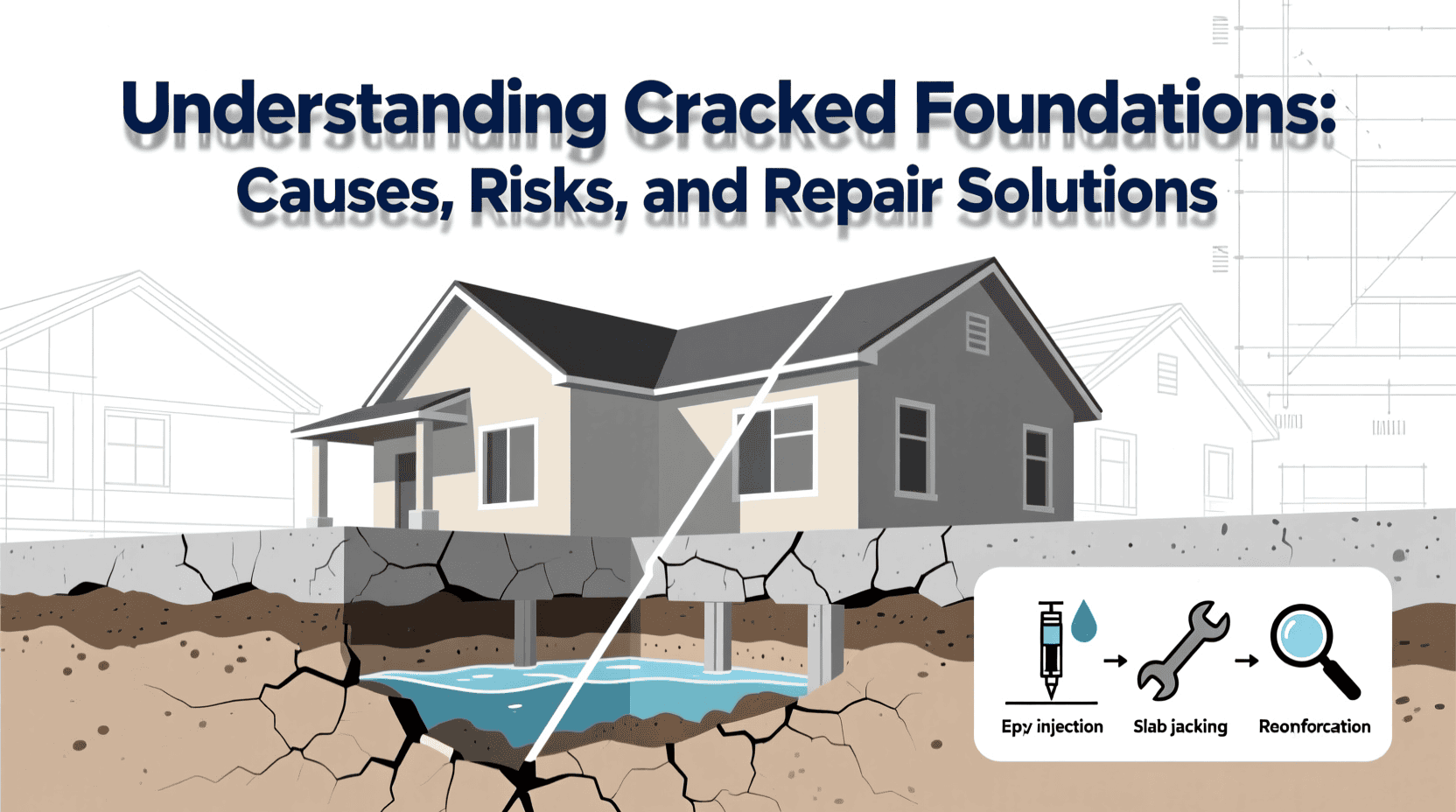
A solid foundation is the bedrock of any stable structure. However, even the most well-built homes can develop issues over time—cracked foundations being among the most common and concerning. While a small hairline crack might seem harmless, it can be the first sign of deeper structural problems that require immediate attention.
In this comprehensive guide, we’ll explore everything you need to know about cracked foundations: what causes them, how to recognize them, when to worry, and how they can be repaired. By understanding the problem early, you can take proactive steps to protect your home and avoid costly repairs in the future.
What Is a Cracked Foundation?
A foundation crack is any visible split, separation, or fracture in the concrete or masonry that supports your home. These cracks can appear in the walls, floor, or slab of a foundation and can vary in size, direction, and severity. While some cracks are superficial and cosmetic, others may signal significant structural distress.
Types of Foundation Cracks
Understanding the type of crack can help you assess the potential severity and appropriate repair methods:
1. Vertical Cracks
These run straight up and down (or slightly diagonal) and are often caused by normal settling of the foundation. Most vertical cracks are not structurally threatening but should be monitored and sealed to prevent water infiltration.
2. Horizontal Cracks
These are more serious and usually result from soil pressure pushing against the foundation walls. They often indicate structural failure and require immediate professional attention.
3. Diagonal Cracks
Running at a 30 to 75-degree angle, diagonal cracks may be caused by differential settling—when one part of the foundation sinks more than another.
4. Stair-Step Cracks
Often found in brick or block foundations, these cracks follow the mortar joints in a zig-zag pattern. They are typically caused by foundation movement or settlement and can range from minor to severe.
5. Hairline Cracks
These are very thin cracks (less than 1/16 inch wide) and are often the result of concrete shrinkage. While usually cosmetic, they should still be sealed to prevent water entry.
Common Causes of Cracked Foundations
Several factors can contribute to foundation cracks, including:
1. Soil Movement
Expansive soils—those that shrink when dry and swell when wet—can put pressure on the foundation, causing it to crack over time.
2. Poor Drainage
Improper grading or clogged gutters can allow water to pool around the foundation, weakening the structure and leading to cracks.
3. Tree Roots
Large trees planted too close to the house can draw moisture from the soil, causing uneven drying and soil shrinkage, which stresses the foundation.
4. Improper Construction
Poor site preparation, inadequate footings, or low-quality concrete can make a foundation more vulnerable to cracking.
5. Seismic Activity
Earthquakes and ground vibrations can cause sudden shifts in the foundation, leading to significant cracking.
6. Frost Heave
In colder climates, the freezing and thawing cycle can cause soil expansion and contraction, putting pressure on the foundation walls.
Warning Signs of Cracked Foundations
While some cracks are visible on the foundation itself, others might be hidden or manifest in other parts of the house. Here are common indicators:
- Cracks in drywall or ceilings, especially near doors and windows
- Uneven or sloping floors
- Doors and windows that stick or won’t close properly
- Gaps between walls and ceilings or floors
- Water seepage or dampness in the basement
- Musty smells or visible mold
- Separation of chimney or porch from the house
If you observe any of these symptoms, it’s wise to have a professional evaluation—even if the foundation cracks aren’t immediately visible.
Are Cracked Foundations Dangerous?
Not all cracked foundations are dangerous, but some can compromise your home’s structural integrity. Here’s how to gauge the level of concern:
Cosmetic vs. Structural
- Cosmetic cracks are often hairline or vertical and result from concrete shrinkage. They don’t pose a structural threat but can allow moisture in.
- Structural cracks (especially horizontal, wide, or growing cracks) suggest foundation movement or stress and must be addressed urgently.
Water Intrusion
Cracks can allow water into the basement or crawlspace, leading to mold, rot, and health problems for occupants.
Value and Resale Concerns
Visible foundation issues can deter potential buyers and lower the property’s value, especially if not properly repaired and documented.
Inspection and Assessment
A foundation inspection by a licensed structural engineer or foundation repair specialist typically includes:
- Visual assessment of cracks and surrounding areas
- Measurements of crack width and length
- Evaluation of soil conditions and drainage
- Checking for movement in walls, floors, and door frames
- Recommendations for monitoring or repair
If needed, more in-depth tools like laser levels, soil sampling, or ground-penetrating radar may be used.
Repair Options for Cracked Foundations
The right repair method depends on the type, size, and severity of the crack:
1. Epoxy or Polyurethane Injection
For small, non-structural cracks, injection systems can fill and seal the cracks from the inside. Epoxy is used for structural strength, while polyurethane is better for waterproofing.
2. Carbon Fiber Reinforcement
Carbon fiber strips are applied to walls with horizontal or stair-step cracks to reinforce and stabilize the structure without excavation.
3. Steel Push Piers or Helical Piers
For settling foundations, steel piers can be driven into stable soil layers to lift and support the structure, preventing further movement.
4. Wall Anchors
Used for bowed or buckling walls, wall anchors stabilize the foundation by transferring the load to stable soil away from the wall.
5. Drainage Improvements
In many cases, improving drainage around the home can reduce soil pressure and moisture issues that contribute to cracking.
6. Underpinning
This involves strengthening the foundation by extending it deeper into stable soil or rock. It’s typically used for major structural repairs.
Cost of Repairing Cracked Foundations
Repair costs vary widely depending on the severity and method used:
- Minor crack sealing: $300 – $800
- Carbon fiber reinforcement: $1,000 – $2,500 per wall
- Piers and underpinning: $5,000 – $20,000+
- Waterproofing and drainage fixes: $2,000 – $10,000+
While these costs can seem steep, ignoring a problem can lead to exponentially higher repair bills down the line.
Preventing Foundation Cracks
Here are steps you can take to reduce the risk of foundation cracks:
- Ensure proper grading around your home to direct water away
- Keep gutters and downspouts clean and functioning
- Avoid planting large trees too close to the house
- Install a reliable drainage system if your yard has standing water
- Address plumbing leaks or roof drainage problems promptly
- Monitor for small cracks and seal them early
Final Thoughts
Cracked foundations are not something to take lightly, but they’re also not always a cause for panic. The key is to understand the signs, identify the cause, and take appropriate action before minor cracks turn into major structural issues.
If you’re unsure about the severity of a crack, don’t guess—consult a foundation expert or structural engineer. A proper inspection and timely repair can preserve your home’s value, keep your family safe, and save you thousands of dollars in future repair costs.