























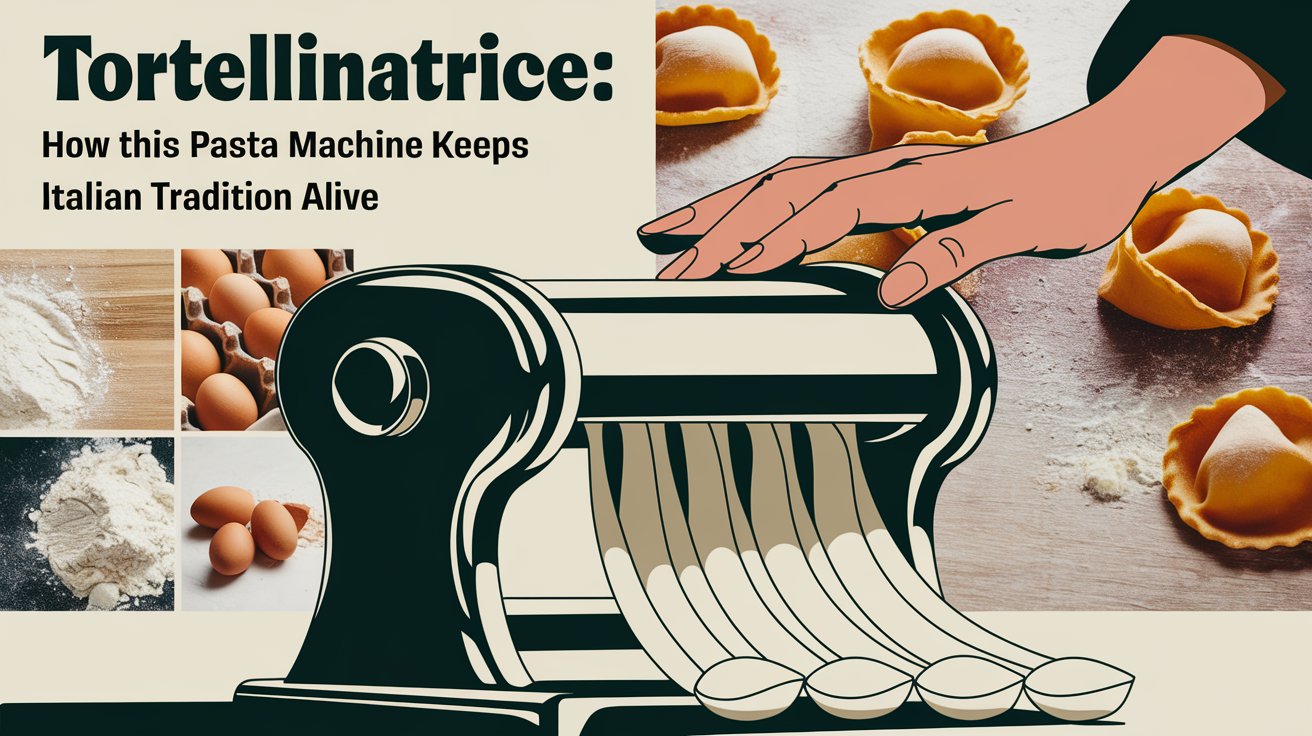
If you’ve ever walked into a traditional Italian kitchen, you know the magic that happens when flour, eggs, and skilled hands come together. Yet, behind the scenes of many bustling pasta shops and family-owned trattorias, there’s a quiet star making it all possible — the tortellinatrice.
It’s not just a machine. It’s a bridge between tradition and efficiency, between handmade quality and modern practicality. Curious? Let’s dive in.
What Exactly Is a Tortellinatrice?
A tortellinatrice is a specialized pasta-making machine designed to shape and seal tortellini — the delicate, ring-shaped pasta hailing from Emilia-Romagna.
Think of it as the perfect assistant for pasta artisans. Instead of folding each tortellino by hand (a task that can take hours), the machine replicates the process with speed and consistency.
But does that mean it takes away the artistry? Not at all. In fact, many Italian chefs use a tortellinatrice to keep up with demand while still preserving the quality of their recipes.
Why Is the Tortellinatrice So Important?
Let’s be real — tortellini is no easy pasta. The filling must be balanced. The fold has to be tight enough to hold during cooking but light enough to stay tender.
The tortellinatrice ensures:
- Consistency – Every piece looks and cooks the same.
- Speed – Thousands of tortellini in a fraction of the time.
- Quality – Modern models handle dough gently, mimicking the human hand.
So, what happens when restaurants or pasta producers skip it? Often, they risk delays, uneven pasta, or even hiring more staff just to keep up.
Tradition Meets Technology
Here’s the interesting part: Italians fiercely protect their food traditions. So, how did a machine like the tortellinatrice gain acceptance?
Because it doesn’t erase tradition — it preserves it.
Think about it. If every tortellino had to be folded by hand in today’s high-demand world, many kitchens couldn’t keep up. The machine allows chefs to focus on fillings, sauces, and flavor, while still delivering pasta that honors Emilia-Romagna’s heritage.
Wouldn’t you agree that true tradition isn’t about rejecting tools, but about keeping flavors alive for future generations?
Different Types of Tortellinatrice
Not all machines are the same. Depending on the scale and needs, pasta makers choose:
1. Manual Tortellinatrice
Ideal for small shops and passionate home chefs. These require some hand-cranking and guidance, but they speed up folding significantly.
2. Semi-Automatic Models
Perfect for medium-sized pasta businesses. They feed dough sheets and filling automatically but still need some oversight.
3. Fully Automatic Machines
These beasts can produce thousands of tortellini per hour. Designed for factories or large pasta brands, they require minimal supervision but a good operator to adjust thickness, filling, and shape.
So, which one is right for you? That depends on whether you’re cooking for family, running a restaurant, or supplying supermarkets.
The Craft Behind the Machine
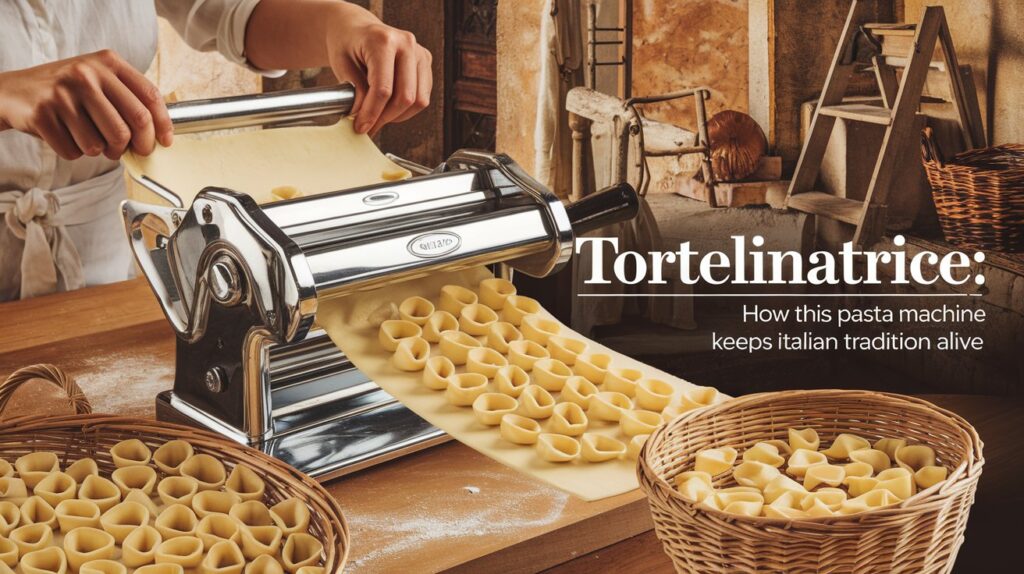
Here’s something many don’t realize: the tortellinatrice doesn’t replace skill. It enhances it.
Why? Because the machine is only as good as the dough and filling you feed it.
A poorly kneaded dough? Torn tortellini.
A watery filling? Messy results.
Chefs still need to understand texture, ratios, and balance. In other words, the machine speeds up production, but the soul of the tortellini still comes from the human touch.
If you’ve ever wondered why following a recipe matters so much in preserving flavor and tradition, you might enjoy reading this piece on Why Is a Recipe Important Heartumental.
How the Tortellinatrice Works Step by Step
- Sheeting the Dough – Thin layers of pasta are fed into the machine.
- Placing the Filling – A precise amount of filling is added in the center.
- Folding and Shaping – The machine folds, presses, and seals each piece.
- Cutting and Finishing – Tortellini come out perfectly shaped, ready to be cooked or dried.
Sounds simple, right? But behind that simplicity lies decades of engineering and tradition combined.
Why Restaurants Love It
Imagine a small trattoria in Bologna. On Sunday, dozens of families line up for fresh tortellini in broth. Hand-making every piece would take days.
With a tortellinatrice, the chef can:
- Serve hundreds without compromising quality.
- Keep prices fair for customers.
- Spend more time perfecting sauces and side dishes.
This way, tradition thrives without burning out the chefs. Isn’t that the dream of every food artisan?
Can Home Cooks Use a Tortellinatrice?
Surprisingly, yes. Smaller, affordable models exist for passionate home chefs.
Imagine hosting a dinner party and serving homemade tortellini, not from a store, but from your own kitchen. That’s a food memory your guests won’t forget.
Of course, it’s an investment. But if you cook often, it pays back in saved time and unmatched flavor.
The Future of Pasta Making
With rising global love for Italian food, the tortellinatrice is becoming even more important. More restaurants abroad are adopting it to bring authentic tortellini to cities far from Italy.
And here’s the exciting part: newer machines are designed to handle multiple pasta shapes — from ravioli to cappelletti. It’s like having a pasta workshop at your fingertips.
What does this mean for food lovers? More authentic Italian pasta on plates worldwide.
Real-Life Example: A Bologna Pasta Shop
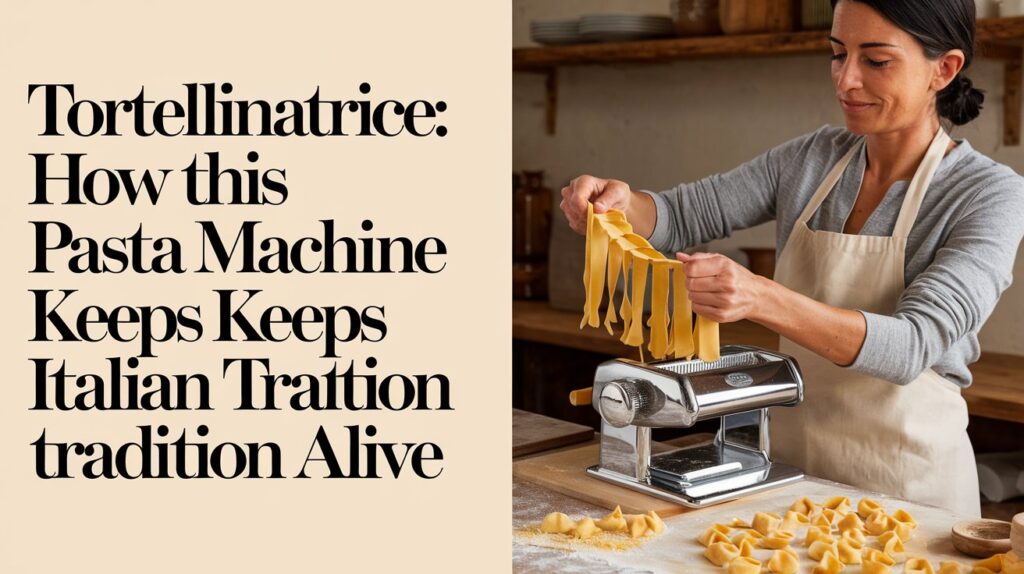
Take “La Sfoglia d’Oro,” a small pasta shop in Bologna. The owners hand-make their fillings daily, but rely on a semi-automatic tortellinatrice to keep up with tourist demand.
Their secret? They don’t see the machine as cheating. They see it as a lifeline. Customers still rave about the handmade taste, because the essence — the dough and filling — remains handcrafted.
This proves that the machine doesn’t erase authenticity. It safeguards it.
Key Takeaways
- The tortellinatrice is a pasta machine dedicated to shaping tortellini.
- It balances tradition with modern efficiency.
- Chefs still need skill, but the machine helps scale production.
- Different models exist for home kitchens, restaurants, and factories.
- Rather than replacing heritage, it ensures tortellini continues to delight generations.
Final Thought
At the heart of it, the tortellinatrice isn’t just about speed. It’s about preserving tradition in a modern world.
Because without it, many kitchens would struggle to keep tortellini alive on menus. And that would be a loss not just for Italy, but for food lovers everywhere.
So next time you savor a bowl of tortellini in broth, remember — there might just be a tortellinatrice working quietly in the background, making sure your plate is full of joy.
For those who love exploring food stories beyond Italian cuisine, check out Snigdhasnack, a delightful journey into snacks and culinary creativity.