
























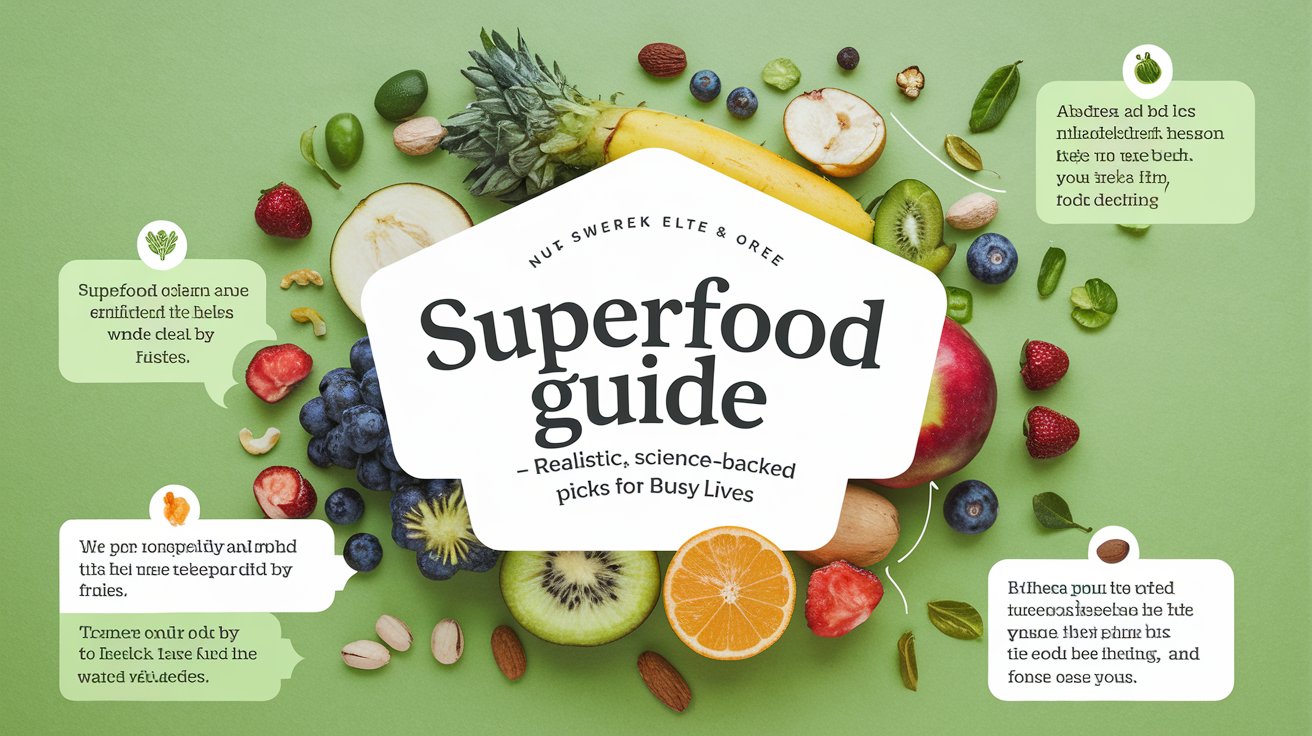
What does “superfood” really mean?
People use the term for foods dense in nutrients, but it’s mostly a marketing label. A better approach: focus on nutrient-dense whole foods that science links to lower disease risk and better daily energy. Think variety over miracles.
Quick question: Does “superfood” mean one food will fix my diet?
Answer: No. A handful of nutrient-rich foods helps — but a consistent pattern of vegetables, fruits, whole grains, healthy fats, and lean protein matters most.
If you’re interested in practical ways to hold on to meaningful lifestyle changes, you may enjoy A blog about @pocketmemories net — Simple Ways to Save & Treasure Your Best Moments.
Top evidence-backed picks (short, usable notes)
- Berries (blueberries, strawberries, raspberries). Small, easy to add to yogurt or oats; linked with improved vascular health and memory support in studies.
Why try them today? Toss frozen berries into smoothies — they keep nutrients and are budget-friendly. Question: Are frozen berries as good as fresh?
Answer: Yes — freezing preserves most antioxidants and makes berries affordable year-round. - Fatty fish (salmon, mackerel, sardines). Rich in EPA/DHA omega-3s tied to heart and brain benefits. Aim for a couple of servings weekly. Question: What if I don’t eat fish?
Answer: Use walnuts, flaxseed or chia as plant alternatives (they supply ALA) and consider algae-based DHA if needed. - Leafy greens & cruciferous veggies (spinach, kale, broccoli). Low-calorie, vitamin-packed, and linked to reduced chronic disease risk. Add a handful to sandwiches, soups, or eggs. Question: How much is enough?
Answer: Aiming for several cups across the day (raw or cooked) makes a big difference — they’re easy to pile on a plate. - Nuts & seeds (walnuts, almonds, chia, flax). Small serving (about a handful) daily correlates with lower heart disease and mortality in pooled studies. They’re portable, filling, and nutrient-dense. Question: Will nuts make me gain weight?
Answer: Not usually — nuts are calorie-rich but satisfying; moderate portions (20–30 g) are associated with health benefits, not weight gain. - Legumes (lentils, beans, chickpeas). Cheap protein plus fiber, helpful for blood sugar and long-lasting fullness. Swap one meat meal a week for a lentil chili. Question: Are canned beans okay?
Answer: Yes — rinse them to reduce sodium. They’re a fast, affordable way to add fiber and protein. - Fermented foods (yogurt, kefir, sauerkraut). May improve gut microbiome diversity and digestion; choose unsweetened options. Question: Do probiotics in food equal supplements?
Answer: Foods provide live cultures plus nutrients; supplements can be useful but are not a superior replacement for fermented whole foods.
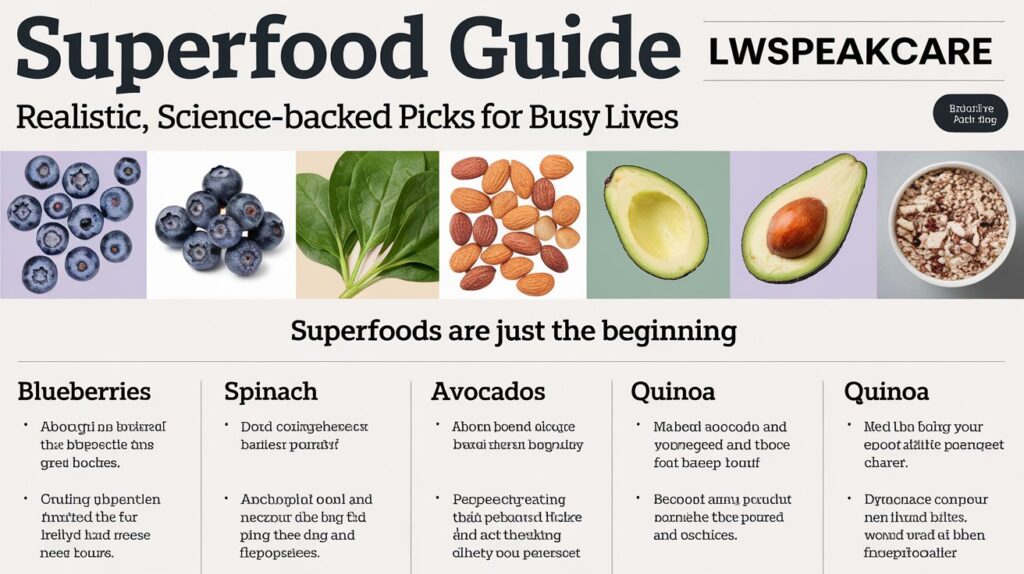
How to build a simple “superfood” plate (real-life example)
- Breakfast: Greek yogurt + frozen berries + a tablespoon of flax or chia.
- Lunch: Big salad with mixed greens, chickpeas, a handful of nuts, olive oil + lemon.
- Dinner: Grilled salmon, steamed broccoli, and a small brown rice pilaf.
Question: Can this be budget-friendly?
Answer: Yes — buy frozen fruit, canned beans, seasonal greens, and bulk grains. Planning and swapping pricier items for in-season or frozen options keeps costs down.
Safety, balance, and reality checks
- No single “superfood” replaces medical care or a balanced diet. Expect steady benefits from patterns, not instant cures.
- Portions matter. Even healthy fats are calorie-dense; moderation keeps energy balance.
- Allergies and interactions. If you’re on blood thinners or have allergies, check with your clinician before large amounts of certain foods (e.g., high-vitamin K greens, omega-3 supplements).
Question: Should I buy supplements instead?
Answer: Food-first is best. Supplements can fill gaps (e.g., vitamin D, B12 for some), but they’re not a substitute for whole-food benefits. Discuss with a provider if unsure.
Final, usable takeaway
Treat bold, nutrient-dense foods as everyday tools, not miracles. Make small swaps (fruit for dessert; beans for one meat meal; a handful of nuts as a snack) and you’ll compound benefits across months and years. This Superfood guide lwspeakcare is about choices you can keep — not fads you can’t.
And if you’re curious about how even something as odd as a string of letters can catch attention online, check out Xaniwadmjiz — Why a Random String of Letters Became a Small Internet Phenomenon.