























Start with a Clear Vision
Before picking out furniture or wall colors, clarify your purpose. Are you designing for relaxation, productivity, or socializing? Your intention shapes everything—color schemes, lighting, even textures.
Why does this matter so much?
Because design without intention often leads to cluttered or mismatched spaces. When you know your goal, you make better choices that feel cohesive.
Learn the Power of the 60-30-10 Rule
This classic ratio helps balance color in any room:
- 60%: Dominant color (walls, large furniture)
- 30%: Secondary color (rugs, curtains)
- 10%: Accent color (art, cushions)
Isn’t that limiting?
Not at all. It gives structure to your creativity. Play within it and your space will feel well-composed—not chaotic.
Understand Your Lighting Layers
Every great space has three layers of lighting:
- Ambient – general light (ceiling fixtures)
- Task – focused light (reading lamps, kitchen lights)
- Accent – mood light (sconces, LEDs, candles)
What’s often overlooked?
Accent lighting—but it’s what adds personality and emotion. Try warm-toned bulbs or hidden LED strips for an instant upgrade.
Lighting design is a professional field for a reason—it changes everything.
Use Texture to Create Depth
Smooth, rough, glossy, matte—textures tell a silent story. Think about mixing wood, metal, linen, glass, and ceramic.
Can I use too many textures?
Yes. Use a few key ones repeatedly. A velvet chair, a jute rug, and a marble table? That’s stylish contrast—not chaos.
Edit Ruthlessly
Clutter kills design. Interior pros at MintpalDecor swear by “less but better.” If it’s not functional or beautiful, it goes.
What about sentimental items?
Curate them. Display only what enhances your space and your mood. The rest can be stored or photographed for memory.
Find a Signature Style—Then Tweak It
Are you minimalist, bohemian, or mid-century modern? Stick to one core style, then layer with personal touches like travel finds or family heirlooms.
But what if I love many styles?
That’s okay. Start with a base (like Scandinavian), then infuse small elements from others (like Moroccan patterns). It’s called “transitional design” and it works beautifully.
Embrace Negative Space
Don’t fill every wall or surface. A blank wall can highlight a nearby artwork. A simple shelf draws more attention to the object on it.
Isn’t that a waste of space?
Nope. It’s breathing room for the eye—and it makes your best pieces stand out more.
Create Visual Balance
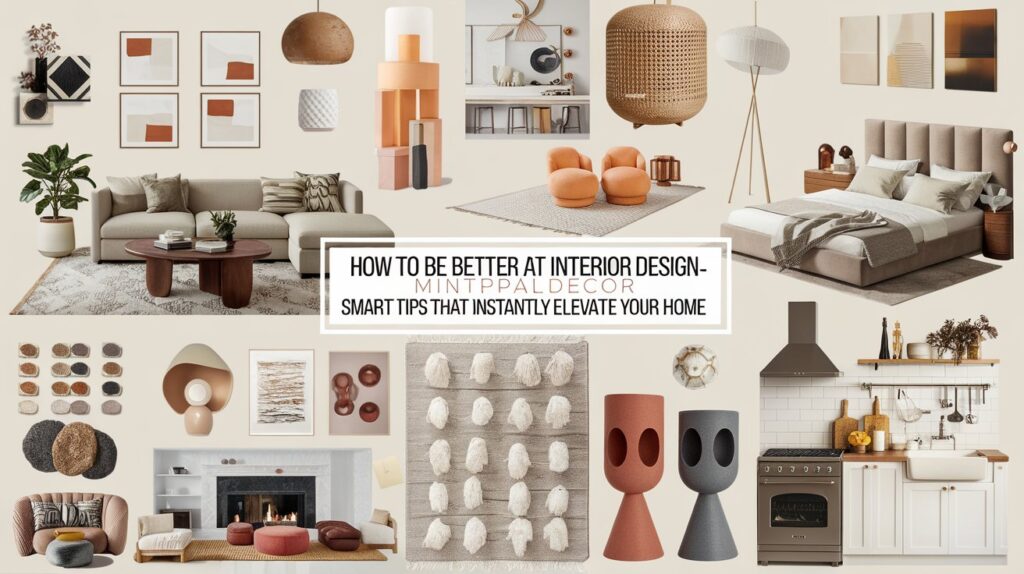
Balance doesn’t mean symmetry. It means distributing visual “weight” evenly. Balance a large sofa with two chairs. A tall lamp with a low table.
What helps achieve this fast?
Mirrors. They reflect light, balance height, and expand space. A trick many designers use in small rooms.
Choose Quality Over Quantity
Instead of buying lots of cheap decor, invest in a few timeless, high-quality items—like a great rug, solid wood table, or real art.
Isn’t that expensive?
Not always. Look for vintage pieces, estate sales, or MintpalDecor’s curated finds that focus on affordability and lasting value.
Check how Scandinavian design champions this idea perfectly.
Make Functionality Beautiful
A shoe rack can be stylish. A laundry basket can be artfully woven. Don’t sacrifice beauty for function—or vice versa.
How do I blend both?
Look for dual-purpose furniture: ottomans with storage, beds with drawers, or desks that double as dining tables.
Stay Inspired—but Be Authentic
Follow trends, but don’t blindly copy Pinterest. Interior design should reflect you. That’s what MintpalDecor aims to teach—personal style over perfection.
Where do I find real inspiration?
Explore homes from different cultures, historical interiors, or even nature. The curves of a leaf or the color of sand can inform a stunning palette.
Learn From the Experts
There’s so much free, rich content from global designers. Follow voices like:
Why bother following professionals?
Because you’ll see what’s timeless vs trendy—and learn to develop an eye for details that elevate a space.
Add a Focal Point to Every Room
Every room needs something to draw the eye—a fireplace, a bold painting, a dramatic chandelier.
What if my room feels boring?
Try a gallery wall, a bold area rug, or even a statement plant like a fiddle leaf fig. It changes everything.
Use Color to Influence Emotion
Colors trigger emotion. Blue calms, yellow energizes, green relaxes.
What’s the safest color to start with?
Neutrals. They’re timeless and easy to pair. Then add pops of color with cushions, vases, or wall art.
Learn how color psychology is used in interior spaces—especially hotels and restaurants.
Keep Evolving Your Space
Design isn’t static. Your needs change. Your tastes grow. Be open to updating, rearranging, or repainting every year or two.
Is that too much work?
Not if you think of your home as a living canvas. That’s what being better at interior design mintpaldecor is really about: constant, joyful improvement.