























Key Highlights
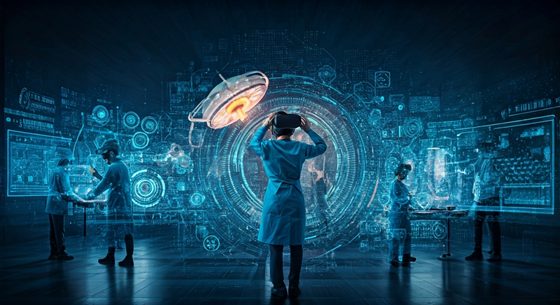
- Virtual reality is rapidly transforming the United States across sectors, from education and healthcare to astronaut training and public outreach.
- VR kiosk mode and booths are increasingly used to manage distraction-free, immersive virtual environments for both business and learning.
- American classrooms are leveraging virtual reality to enhance STEM, arts, and history lessons, supporting personalized, accessible education.
- Healthcare providers use VR for surgical simulation, device training, and rehabilitation, supported by regulatory oversight for patient safety.
- NASA employs virtual reality for astronaut mission preparation, and VR space solutions now connect students to real-world science and space exploration.
- As technology advances, the integration of AR, AI, and avatars promises deeper collaboration, adaptive learning, and broader public access to virtual worlds.
Introduction
Rapid advancements in technology are transforming the fabric of daily life, particularly through immersive technologies. Captivating experiences in virtual environments are reshaping learning, healthcare, and even interstellar exploration. As virtual reality becomes increasingly prevalent, it serves not merely as entertainment but as an essential tool, harnessing augmented reality and artificial intelligence to enhance our understanding of complex subjects. This blend of technology and practical application promises to revolutionize how we engage with information, fostering connections in both personal and professional realms.
The Evolution of Virtual Reality in the United States
Significant advancements have marked the evolution of virtual reality in the United States, transforming how various sectors engage with immersive technologies. Early adoption began with basic setups like the VR kiosk, providing users with their first taste of immersive environments in public or commercial spaces. Since then, rapid innovation has led to sophisticated applications across industries. The integration of AI and simulations into virtual environments has fostered an enriched understanding of complex information, whether in healthcare settings or educational institutions. Consequently, augmented reality, alongside virtual reality, continues to reshape user experiences, bridging the gap between the virtual world and real-world applications.ns.
From Early Kiosks to Widespread Adoption
The journey from early kiosks to widespread adoption of virtual reality has dramatically transformed engagement across various sectors. Initial implementations focused on presenting curated experiences within controlled environments, primarily for entertainment and marketing. As technology evolved, virtual reality became more immersive, offering realistic simulations that blur the lines between the physical and virtual worlds. This evolution paved the way for broader applications in education, healthcare, and beyond, making VR an integral part of everyday experiences in the United States.
Key Milestones Driving VR Innovation
Significant milestones have propelled the evolution of virtual reality within various sectors, notably in healthcare and education. The advent of affordable VR headsets and platforms has democratized access, allowing healthcare providers to integrate immersive simulations into training routines. Groundbreaking advancements in augmented reality (AR) have further enriched virtual environments, combining real-world elements with digital content. Innovations such as artificial intelligence (AI) facilitate personalized experiences, enhancing the training of surgeons and enriching classrooms, ultimately transforming how we engage in these vital fields.
Transforming Classrooms: VR in American Education
Incorporating virtual reality into American classrooms is redefining the educational landscape. By providing immersive experiences, students engage with subjects like STEM, history, and the arts in ways that foster deeper understanding and retention. Personalized and adaptive learning environments heighten accessibility, allowing diverse learners to thrive within a virtual world tailored to their needs. With virtual reality headsets enabling real-time interactions, both educators and students can explore complex concepts through simulation, establishing a dynamic learning atmosphere that bridges the gap between imagination and reality.
Enhancing STEM, History, and Arts Through Immersive Experiences
Experiencing subjects like STEM, history, and the arts has been transformed through immersive virtual environments. Virtual reality enables learners to engage with complex concepts in a simulated space, enhancing retention and curiosity. In addition to traditional methods, students can explore historical events or scientific principles as if they were firsthand participants. This interactive approach reduces cognitive load, making learning fluid and enjoyable. As educators incorporate augmented reality and AI tools, the potential for personalized education continues to evolve, fostering a dynamic learning landscape.
Personalized, Adaptive Learning and Accessibility
Customized experiences in virtual reality enhance learning by adapting to individual needs and learning styles. As students navigate through immersive virtual environments, real-time feedback and data analytics allow educators to tailor lessons, fostering greater engagement. This approach significantly improves accessibility for diverse learners, including those with disabilities. Utilizing avatars and augmented reality elements, these innovative educational tools break down barriers, ensuring that every student can thrive in the classroom while developing critical skills required for the future workforce.
Virtual Reality for Students of All Ages
Diverse age groups can benefit significantly from immersive experiences provided by virtual reality. In preschool settings, simple simulations engage young minds, fostering creativity and curiosity. As students progress to primary and secondary education, VR enhances understanding through interactive environments that easily visualize complex concepts. For higher education, virtual reality opens doors to realistic simulations, critical for fields like healthcare and engineering. This extended reality not only enriches traditional learning but also ensures inclusivity, making education accessible to all.
Pre-School / Infant / Kindergarten
Immersive virtual environments are opening new avenues for early childhood education, where engagement is crucial. Utilizing VR headsets, young learners can explore fantastical worlds, enabling them to develop cognitive skills in a playful manner. Augmented reality components create interactive learning experiences that stimulate curiosity. Through simulations designed specifically for preschoolers, educational content becomes both accessible and enjoyable, fostering a love of learning from an early age. Caregivers also benefit as they gain tools to better support and engage with their children in real time.
Primary School / Elementary School
Engagement in primary school education is being revolutionized through immersive virtual environments. Students can explore concepts like geometry or biology in real time, making learning both interactive and enjoyable. Utilizing VR headset technology, educators can create dynamic, simulation-based lessons, enhancing understanding and retention. Furthermore, virtual reality fosters collaboration among young learners, allowing them to share avatars and participate in group projects. This approach not only helps to cultivate a love for learning but also prepares students for a tech-driven future.
Secondary School / Middle School
Immersive technology is transforming how middle school students engage with their curriculum. Virtual environments allow learners to experience complex subjects like physics or history in unprecedented ways. Instead of traditional textbooks, students can don a virtual reality headset, stepping into a world where abstract concepts become tangible and interactive. These extended reality experiences not only foster critical thinking but also cater to diverse learning styles, enabling educators to personalize instruction effectively and enhance student participation in real time.
Higher or Further Education
Immersive technologies are revolutionizing higher education, offering students a chance to explore complex subjects in dynamic virtual environments. Through virtual reality headsets, learners engage with augmented reality (AR) elements, creating interactive simulations that enhance understanding. This approach not only facilitates collaborative projects among peers using digital avatars but also allows for real-time feedback from educators. As a result, higher education institutions are better equipped to prepare students for real-world challenges, bridging the gap between theory and practical application in various fields.
Vocational Courses and Training
Immersive virtual environments revolutionize vocational courses and training, offering hands-on experiences without the limitations of the real world. Participants engage with advanced simulations, utilizing virtual reality headsets to practice skills in fields such as plumbing, electrical work, and culinary arts. This interactive approach not only fosters deeper learning but also enhances retention among trainees. As healthcare providers and businesses increasingly adopt these technologies, the gap between formal education and practical application continues to narrow, equipping individuals with the necessary competencies for success.
Revolutionizing Healthcare: VR in Surgery and Medical Training
Immersive virtual environments are transforming the way healthcare providers approach surgical training and education. Through the use of simulation-based learning, surgeons can practice intricate procedures in a risk-free setting, enhancing their skills with real-time feedback. Virtual reality headsets enable caregivers to collaborate and learn together, regardless of their physical location, fostering a culture of continuous improvement. As this technology advances, patient outcomes are expected to improve significantly, making virtual reality an indispensable tool in modern healthcare training.
Simulation-Based Learning for Surgeons and Medical Professionals
Immersive simulation-based learning is revolutionizing training for surgeons and medical professionals. By utilizing virtual reality environments, healthcare providers can practice intricate procedures in a risk-free setting, honing their skills and decision-making. Advanced VR headsets enable real-time interaction with lifelike avatars, allowing trainees to experience high-stakes scenarios that mimic operating room dynamics. This innovative approach not only enhances surgical proficiency but also improves collaboration among caregivers, ultimately leading to better patient outcomes and safer healthcare practices in the United States.
Safety, Regulation, and Patient Outcomes in VR Healthcare Solutions
Ensuring safety in virtual reality healthcare solutions involves rigorous regulatory frameworks that guide development and implementation. Healthcare providers must navigate these guidelines to create effective virtual environments that enhance patient outcomes. Routine assessments and real-time monitoring of VR applications bolster confidence among caregivers, while embracing best practices in simulation training. As the integration of augmented reality and artificial intelligence evolves, their roles in maintaining safety standards and improving patient care become increasingly vital in the healthcare landscape.
VR Beyond Earth: Space Missions and Astronaut Training
Utilizing virtual reality for space missions significantly enhances training and preparedness for astronauts. NASA’s integration of VR technology allows for realistic simulations of extraterrestrial environments, enabling crews to practice maneuvers and problem-solving in a controlled, immersive setting. This approach not only familiarizes astronauts with the challenges of space but also promotes collaboration within the team. Through avatars and virtual environments, participants can interact in real time, making complex simulations reproducible for various training scenarios, thereby ensuring robust mission readiness.
NASA’s Use of VR for Mission Preparation and Collaboration
Utilizing advanced virtual reality technology, NASA has transformed mission preparation and collaboration. By immersing astronauts in a highly interactive virtual environment, teams can simulate real-world scenarios, enhancing problem-solving skills and teamwork in extended reality settings. VR tools enable astronauts to practice intricate operations within a virtual world, ensuring they are well-prepared for the challenges of space travel. Additionally, real-time collaboration across different locations fosters communication, making it easier for healthcare providers and engineers to work together efficiently on missions.
Space-Themed Learning and Outreach for U.S. Students and the Public
Engaging students in space-themed learning has gained momentum through innovative virtual experiences. Programs utilizing virtual reality headsets create immersive environments, enabling learners to explore the cosmos in real time. This interactive approach not only enhances STEM education but also fosters curiosity about outer space. Additionally, outreach initiatives provide public access to these virtual worlds, democratizing knowledge. By leveraging avatars and simulations, NASA and educational institutions bridge the gap between theoretical learning and tangible understanding, inspiring future generations of explorers.
Conclusion
The transformative potential of virtual reality is nothing short of extraordinary. As it continues to reshape America’s landscape, we witness innovative applications across sectors, from education to healthcare and beyond. Embracing this technology enables interactive, immersive experiences that not only enhance learning and training but also improve outcomes in real-world applications. Through ongoing advancements, the interface between our virtual environments and the physical realm will only deepen, heralding a new era defined by creativity, collabo