
























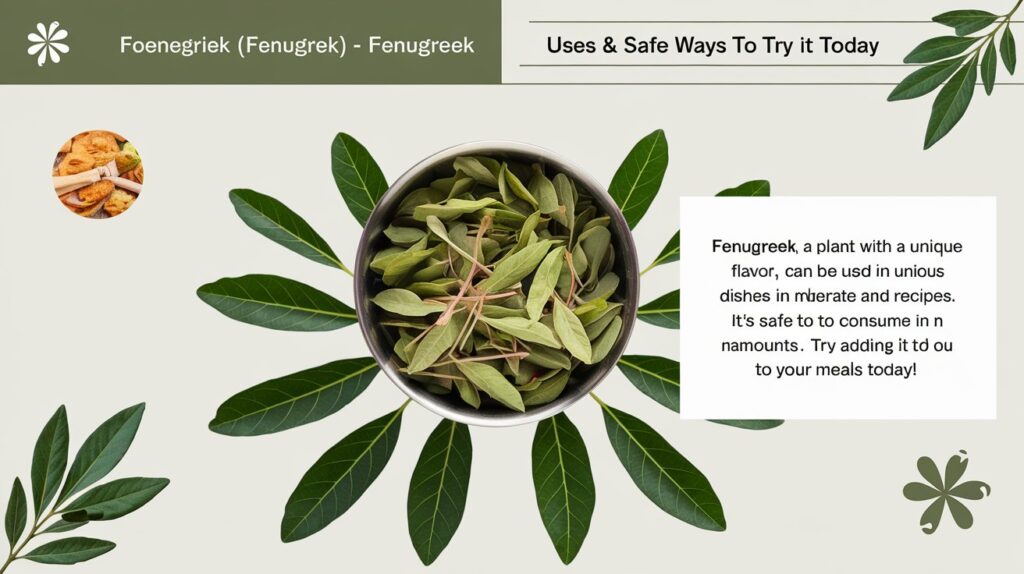
Foenegriek (also called fenugreek) is a small, clover-like herb whose seeds and leaves pack big flavor and practical benefits. It shows up in North African and South Asian kitchens, in herbal remedies, and even in specialty Dutch cheeses. What makes it worth your attention? Read the short, useful points below.
Quick facts — the essentials
- Scientific name: Trigonella foenum-graecum.
- Parts used: seeds (bitter, maple-like aroma) and leaves (fresh or dried).
- Origin: native to the Mediterranean, Middle East and South Asia; widely cultivated today (India is a major producer).
Curious: is Foenegriek the same as what Indian cooks call “methi”?
Yes — the fresh leaves are called methi, and the seeds are the same plant’s spice.
If you enjoy exploring the roots of words and names like Foenegriek, you might also like learning about Pellela — Origins, Meaning, and How to Trace the Name.
Flavor and culinary uses — how chefs use it
- Seeds: toasted or ground, they add warm, slightly bitter, nutty and maple-like notes to curries, pickles, and spice mixes.
- Leaves: used fresh in parathas, dals, and vegetable dishes for a green, slightly bitter lift.
- European twist: used in some Dutch cheeses for a nutty, aromatic finish.
Question: will a little seed overwhelm a dish?
Answer: start small — a teaspoon of seeds to a pot is plenty; roasting seeds first reduces bitterness and unlocks aroma.
Practical benefits — what evidence supports common claims
Many traditional uses exist: to support digestion, increase breastmilk production, and add nutrients like fiber, iron, and protein. Modern reviews show some promising but mixed results — for example, controlled studies suggest fenugreek may help modestly with blood sugar regulation and breastfeeding support, but evidence varies by dose and formulation. Always check clinical sources before using it therapeutically.
Wondering if Foenegriek will fix your blood sugar or increase milk overnight?
Short answer: it can help for some people when used consistently, but it’s not a guaranteed quick fix — consult reliable health guidance first.

How to use it — simple, real-world ways
- Spice seed tip: dry-roast seeds in a pan until fragrant, then crush for spice blends.
- Leaf tip: use fresh methi like spinach — brief cooking keeps its aroma.
- Tea: steep crushed seeds in hot water (10–15 minutes) for a warming infusion.
- Cooking swap: if a recipe calls for a maple-like accent, a small pinch of fenugreek seeds can mimic that profile.
Question: how much is safe daily in food?
Answer: culinary amounts are safe for most people. When taking concentrated extracts or supplements, follow label dosing and medical advice.
Safety and interactions — what to watch for
- Side effects: digestive upset or body odor are possible with larger doses.
- Interactions: may affect blood sugar and interact with diabetes medications; pregnant people should avoid medicinal doses because it can stimulate uterine contractions. Always check with a healthcare provider if you’re pregnant, nursing, diabetic, or on medication.
Question: can kids eat Foenegriek?
Answer: small culinary amounts are generally fine, but avoid concentrated medicinal doses for children unless guided by a pediatrician.
Buying, storing, and quality tips
- Buy: whole seeds last longer than ground; choose a reputable spice supplier or grocery.
- Store: airtight jar in a cool, dark place — seeds stay good for many months; ground spice loses aroma faster.
- Label watch: look for Trigonella foenum-graecum on specialty herb pages or spice labels if you want the botanical match.
Question: how can you tell if seeds are still fresh?
Answer: crush one — fresh seeds smell sweet and warm (some say “maple-like”); stale seeds smell muted or musty.
Real-life example — the cheese trick
Dutch farmhouse cheeses sometimes include fenugreek seeds. The seeds give a subtle walnut-maple note that lifts the milky base without overpowering it. If you like nutty, slightly sweet accents in cheese or baked goods, a hint of Foenegriek can be delightful.
Curious if you can add it to your own cheese or bread?
Yes — small quantities of roasted seeds work well in savory breads or homemade cheese experiments; test small batches first.
Quick takeaway — use this checklist
- Try roasted seeds for spice depth.
- Use fresh leaves for green dishes.
- Don’t take high-dose supplements without medical advice.
- Store seeds whole, airtight, and cool.
Final question: where to learn more from reliable sources?
Start with botanical and health authority pages like Wikipedia’s Fenugreek entry and the NIH/NCCIH overview for safety and evidence-based notes.
And if you’re curious about practical guides beyond the kitchen, check out Soutaipasu explained — quick, practical guide to relative paths for a clear breakdown of how relative paths work.