























Artificial Intelligence (AI) has become one of the most transformative technologies of our time, and its impact on manufacturing is nothing short of revolutionary. From optimizing supply chains to enabling predictive maintenance and creating smart factories, AI is reshaping how manufacturing companies operate, innovate, and compete in the global marketplace.
In a sector traditionally driven by efficiency, cost reduction, and precision, AI is emerging as the ultimate enabler. By combining machine learning, computer vision, robotics, and advanced analytics, manufacturers can achieve levels of productivity and adaptability that were once considered impossible.
How AI is Reshaping Manufacturing
1. Predictive Maintenance
Unexpected downtime has always been one of the costliest challenges in manufacturing. Traditional maintenance schedules rely on routine checks, often replacing parts earlier than necessary or, worse, dealing with failures after they occur. AI-driven predictive maintenance leverages data from sensors, IoT devices, and machine learning models to detect potential issues before they disrupt operations. This minimizes downtime, extends equipment lifespan, and reduces unnecessary costs.
2. Smart Quality Control
Quality control is central to manufacturing success. Traditionally, it involved manual inspections or basic automation that could miss defects. Today, AI-powered computer vision systems can analyze products in real-time, identifying even the smallest defects at speeds human inspectors could never match. This not only improves product quality but also ensures consistency across large-scale production.
3. Supply Chain Optimization
The COVID-19 pandemic revealed just how fragile global supply chains can be. AI is now being used to forecast demand, manage inventories, and predict disruptions before they occur. By analyzing vast amounts of data, AI helps manufacturers balance supply with demand, reduce waste, and increase overall efficiency.
4. Robotics and Automation
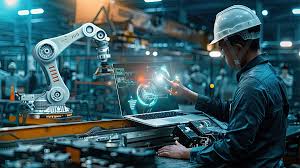
AI-driven robotics are making manufacturing floors smarter. Unlike traditional industrial robots programmed for repetitive tasks, AI-powered robots can learn, adapt, and handle more complex processes. These robots can work alongside human employees, enhancing productivity without replacing the human workforce entirely.
5. Energy Efficiency
Sustainability is no longer optional in manufacturing. AI helps optimize energy use by analyzing consumption patterns and making real-time adjustments. Smart grids and AI-driven monitoring systems allow factories to cut down on wasteful energy practices, lowering costs while meeting sustainability goals.
Benefits of AI in Manufacturing
- Increased Productivity – Faster production cycles and optimized operations mean manufacturers can produce more in less time.
- Cost Savings – By reducing downtime, minimizing defects, and optimizing resources, AI directly cuts operational costs.
- Improved Safety – AI-powered monitoring systems can detect hazards and ensure worker safety through predictive alerts.
- Customization at Scale – AI enables manufacturers to personalize products for customers without sacrificing efficiency.
- Data-Driven Decision Making – With AI, manufacturers can use real-time analytics for strategic and operational decisions.
Challenges of AI Adoption
While the potential benefits are significant, implementing AI in manufacturing comes with its own set of challenges:
- High Implementation Costs – Setting up AI-driven systems requires heavy investment in technology, infrastructure, and skilled talent.
- Data Security Concerns – With the increasing reliance on connected devices, protecting sensitive manufacturing data is critical.
- Workforce Transformation – Employees need to be reskilled to work effectively alongside AI-driven systems, which can be a barrier for traditional industries.
- Integration with Legacy Systems – Many manufacturers still rely on outdated machinery and software, making AI integration complex and costly.
Real-World Applications
- Automotive Industry – AI is driving autonomous vehicle production lines and real-time defect detection for car parts.
- Electronics Manufacturing – AI ensures precision in assembling delicate components while reducing human error.
- Food and Beverage – AI monitors quality, packaging, and logistics, ensuring consistency and safety.
- Heavy Machinery – Predictive analytics prevents costly downtime by maintaining critical production equipment.
The Future of AI in Manufacturing
Looking ahead, AI is expected to play an even more critical role in the manufacturing industry. The rise of Industry 4.0—the era of smart, interconnected factories—will depend heavily on AI. Future trends include:
- Hyper-Personalization – Using AI to create highly customized products for consumers without disrupting mass production workflows.
- Digital Twins – Virtual models of factories or machines that mirror real-world conditions, enabling manufacturers to test and optimize processes before implementation.
- Autonomous Factories – Facilities that largely run on AI and robotics, requiring minimal human intervention.
- Sustainable Manufacturing – AI will be central in reducing waste, cutting emissions, and ensuring eco-friendly practices.
Choosing the Right AI Development Partners
For manufacturers looking to adopt AI, partnering with the right experts is crucial. Many businesses collaborate with specialized AI development companies that bring the technical knowledge and industry experience needed to design and implement tailored AI solutions. Whether it’s predictive maintenance systems, robotics, or data-driven supply chain optimization, these partnerships help manufacturers accelerate transformation while reducing risk.
Conclusion
AI is not just an upgrade for manufacturing—it is a complete transformation of how the industry operates. From predictive maintenance and quality control to robotics and sustainability, AI is unlocking opportunities that redefine production. While challenges such as cost, data security, and integration remain, the benefits are far too significant for manufacturers to ignore.
As AI continues to evolve, those who embrace it early will be best positioned to lead in the era of Industry 4.0. For companies ready to take the leap, exploring solutions through experienced partners in the field of ai development companies is a practical first step toward building smarter, faster, and more resilient manufacturing systems.