











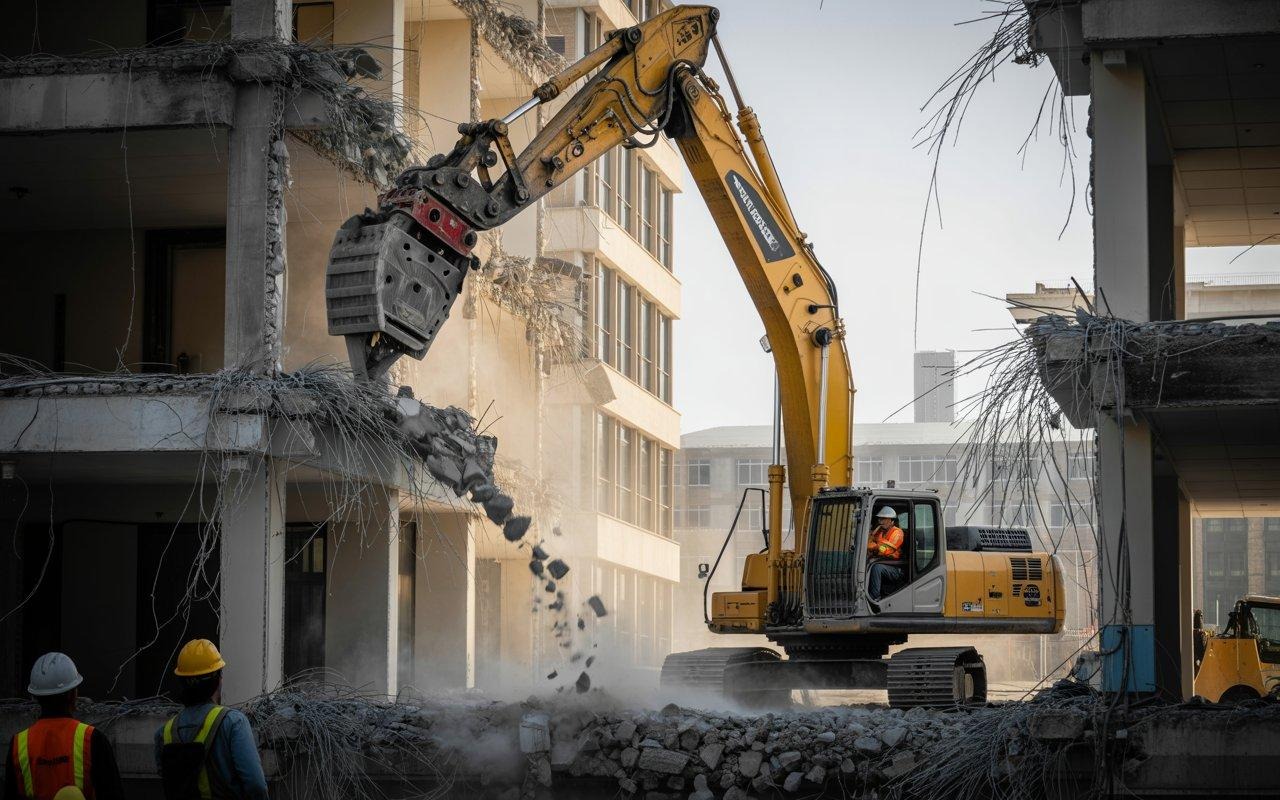
Commercial demolition projects in Seattle represent some of the most complex, regulated, and high-stakes construction work in the Pacific Northwest. Whether you’re a property developer eyeing a teardown-and-rebuild opportunity in South Lake Union, a business owner needing to remove an obsolete warehouse in SoDo, or a contractor managing a multi-phase redevelopment in Capitol Hill, understanding the unique challenges of commercial demolition in our city isn’t optional—it’s essential.
Unlike residential projects, commercial demolition operates at a different scale entirely. We’re talking about multi-story structures with complex mechanical systems, strict environmental regulations around materials like asbestos and lead, coordination with multiple city departments and utilities, neighbor notification requirements, and tight timelines that directly impact your bottom line. One misstep can trigger project delays measured in months, not days, and cost overruns that quickly reach six figures.
This comprehensive guide walks you through everything you need to know about commercial demolition Seattle WA projects: the permitting maze, environmental compliance requirements, cost factors that drive budgets, selecting qualified contractors, and the strategic decisions that separate successful projects from costly nightmares. Whether you’re in the early planning stages or ready to break ground, this information will help you make informed decisions that protect your investment and keep your project on track.
Understanding Commercial Demolition: More Than Just Knocking Things Down
Commercial demolition encompasses the planned, safe, and legally compliant dismantling of non-residential structures. In Seattle, this includes office buildings, retail spaces, warehouses, industrial facilities, multi-family apartment complexes, restaurants, medical facilities, schools, and mixed-use developments.
The distinction between commercial and residential demolition matters enormously. Commercial projects face:
Heightened regulatory scrutiny: Multiple city departments—Seattle Department of Construction and Inspections (SDCI), Seattle Public Utilities, Seattle Fire Department, and sometimes King County agencies—all have jurisdiction over different aspects of your project.
Complex structural considerations: Multi-story buildings, steel frame construction, reinforced concrete, and integrated mechanical systems require engineering expertise and specialized equipment far beyond what residential work demands.
Environmental compliance obligations: Commercial structures, especially those built before 1980, almost certainly contain regulated hazardous materials. Washington State Department of Ecology and EPA regulations govern how these materials must be identified, handled, and disposed of.
Occupied adjacent properties: Your demo site likely sits next to operating businesses. Dust control, noise management, vibration monitoring, and maintaining access for neighboring tenants become critical project management challenges.
Higher liability exposure: The scale of commercial work means potential damages—to adjacent properties, public infrastructure, or persons—carry proportionally higher financial and legal consequences.
Professional demolition contractors in Seattle WA who specialize in commercial work bring capabilities that general contractors or residential-focused demo companies simply don’t possess: structural engineers on staff or retainer, HAZMAT-certified supervisors, relationships with specialized disposal facilities, bonding capacity for large projects, and experience navigating Seattle’s unique regulatory environment.
The Seattle Commercial Demolition Permitting Process: A Step-by-Step Breakdown
Seattle’s permitting requirements for commercial demolition rank among the most thorough in the nation—and for good reason. Our city prioritizes environmental protection, historic preservation, worker safety, and neighborhood livability. Here’s what you need to navigate:
Phase 1: Pre-Application Requirements (2-4 Weeks)
Before you can even submit a demolition permit application, you must complete several prerequisite steps:
Environmental site assessment: For commercial properties, Phase I Environmental Site Assessments (ESAs) are typically required to identify potential soil or groundwater contamination. If contamination is suspected, Phase II testing may be necessary. This work must be performed by licensed environmental consultants.
Hazardous materials survey: Washington State law requires a thorough asbestos and hazardous materials survey before demolition of any commercial structure. Licensed asbestos inspectors must sample and analyze building materials. Lead paint, PCBs, mercury, and other hazardous substances must also be identified. Survey reports go to both SDCI and the Puget Sound Clean Air Agency.
Utility verification: Seattle City Light, Seattle Public Utilities, and private utility providers (gas, telecommunications) must confirm all services are disconnected or properly capped. This coordination alone can take 2-3 weeks as utility companies schedule inspections and work.
Neighbor notification: Seattle Municipal Code requires property owners to notify adjacent property owners and tenants of planned demolition work. Specific notification requirements vary by project location and zoning but typically include 30-day advance written notice.
Historic review: If your property lies within a designated historic district or the building is over 25 years old in certain zones, the Seattle Department of Neighborhoods may need to review for potential historic significance. This can add 30-60 days to timelines.
Phase 2: Permit Application (1-3 Weeks Processing)
The actual demolition permit application through SDCI requires extensive documentation:
- Completed demolition permit application form with property details and scope description
- Site plan showing structure location, property lines, adjacent structures, and staging areas
- Proof of utility disconnection or detailed disconnection plan
- Hazardous materials survey report with abatement plan if materials are present
- Erosion and sediment control plan (required for sites over 750 square feet of disturbance)
- Stormwater management plan showing how you’ll handle runoff during and after demo
- Traffic control plan if work impacts sidewalks, streets, or parking
- Dust control plan meeting Puget Sound Clean Air Agency standards
- Noise variance application if work extends beyond standard hours (7 AM – 7 PM weekdays)
- Proof of liability insurance (typically $2-5 million for commercial projects)
- Contractor license verification for all prime and sub-contractors
SDCI reviews applications for completeness and compliance. Simple projects may clear in 1-2 weeks. Complex demolitions—particularly those in environmentally critical areas, near waterfronts, or involving large structures—can take 3-6 weeks or more if additional information is requested.
Phase 3: Pre-Demolition Approvals and Abatement (Variable Timing)
If your hazardous materials survey identified asbestos, lead paint, or other regulated materials, abatement must occur before demolition begins:
Asbestos abatement: Licensed asbestos abatement contractors must remove all friable and regulated non-friable asbestos-containing materials. The Puget Sound Clean Air Agency requires 10-day advance notification before abatement begins. Work must follow strict containment, removal, and disposal protocols. Timeline: 1-6 weeks depending on quantity and locations.
Lead paint management: While complete lead abatement isn’t always required for demolition, contractors must follow EPA’s Renovation, Repair and Painting (RRP) Rule and implement lead-safe work practices. This includes containment, HEPA filtration, and proper waste disposal.
Other hazardous materials: PCB-containing ballasts, mercury switches, refrigerants, and other materials require specialized handling and disposal at approved facilities.
Abatement costs for commercial buildings typically range from $15,000 to $200,000+ depending on the extent of hazardous materials present. This work happens before structural demolition begins and requires separate permitting through the Puget Sound Clean Air Agency.
Phase 4: Demolition Execution and Inspections (Project-Dependent)
Once permits are secured and abatement is complete, demolition can proceed. Throughout the work, multiple inspections ensure compliance:
- Pre-demolition inspection: SDCI inspector verifies utilities are disconnected and required safeguards are in place
- Ongoing compliance monitoring: Puget Sound Clean Air Agency may conduct unannounced inspections for dust control compliance
- Stormwater inspections: Seattle Public Utilities or SDCI may inspect erosion control measures
- Final inspection: After debris removal and site grading, SDCI conducts a final inspection to close the permit
The entire permit-to-completion timeline for commercial demolition in Seattle typically spans 8-16 weeks for straightforward projects and 4-8 months for complex demolitions with significant hazardous materials or regulatory complications.
Permit Cost Reality Check
Seattle demolition permit fees scale with project value:
- Base demolition permit fee: $170-1,000+ depending on building size and complexity
- Plan review fees: $500-5,000+ for complex projects
- SEPA (State Environmental Policy Act) review: $2,000-10,000+ if required for larger projects
- Utility disconnection fees: $500-2,000 per utility
- Asbestos notification fees (Puget Sound Clean Air Agency): $160 per project
- Traffic control permit: $300-1,500 if street use is needed
- Noise variance: $345 per application
Total permitting costs for commercial demolition typically range from $3,000-25,000 depending on project complexity and size.
Environmental Compliance: The Non-Negotiable Reality
Environmental regulations represent the single biggest differentiator between amateur and professional commercial demolition work. The consequences of non-compliance—fines, stop-work orders, personal liability for contamination cleanup—can destroy projects and companies.
Asbestos: The Invisible Project Killer
Any commercial building constructed before 1980 almost certainly contains asbestos in some form. Common locations include:
- Fireproofing spray on structural steel
- Pipe and boiler insulation
- Floor tiles and mastic adhesive
- Ceiling tiles and textures
- Roofing materials and flashing
- Exterior siding and cement board
- Window caulking and glazing compounds
Washington State regulations (WAC 296-62) and federal EPA rules (NESHAP – National Emission Standards for Hazardous Air Pollutants) require:
- Comprehensive survey before demolition: Only state-accredited asbestos inspectors can perform surveys
- 10-day advance notification: All projects must notify the Puget Sound Clean Air Agency at least 10 working days before asbestos work begins
- Licensed abatement contractors only: Asbestos removal requires specific contractor certification
- Proper disposal: Asbestos waste must go to approved landfills with proper manifesting
Violation penalties: The Puget Sound Clean Air Agency can levy fines up to $10,000 per day of violation. EPA penalties reach $25,000 per day. Beyond fines, contractors face license suspension, project stop-work orders, and potential criminal liability.
Professional seattle demolition contractors coordinate the entire asbestos compliance process: hiring certified inspectors, managing agency notifications, contracting with licensed abatement firms, and maintaining documentation. Attempting to “demo around” asbestos or handle it yourself isn’t just illegal—it’s dangerous and expensive.
Lead Paint and Heavy Metals
Pre-1978 commercial buildings likely contain lead-based paint. While demolition may not require complete lead abatement (as renovation work would), contractors must:
- Implement EPA RRP Rule lead-safe practices if the building was constructed before 1978
- Contain dust during demolition using barriers and HEPA filtration
- Properly dispose of lead-contaminated debris at approved facilities
- Protect workers with appropriate PPE and hygiene protocols
- Prevent lead contamination of soil and stormwater
Some older commercial buildings also contain mercury switches (HVAC thermostats, lighting fixtures) and PCB-containing electrical equipment (transformers, ballasts). These require special handling and disposal.
Soil and Groundwater Considerations
Seattle’s industrial history means many commercial properties—especially in SoDo, Georgetown, and along waterfront areas—have soil or groundwater contamination from previous uses. Common contaminants include:
- Petroleum hydrocarbons from underground storage tanks or spills
- Heavy metals from industrial processes
- Solvents and chemicals from manufacturing or dry-cleaning operations
- Creosote from rail yards and timber operations
When demolition involves excavation or soil disturbance, contaminated soil management becomes critical:
Soil testing and characterization: Before disposal, soil must be tested to determine contamination levels and proper disposal classification (dangerous waste vs. contaminated soil vs. clean fill).
Disposal at appropriate facilities: Contaminated soil cannot go to standard C&D landfills. It must go to facilities permitted to accept contaminated materials. Seattle-area options are limited, and disposal costs can reach $200-500 per ton compared to $30-60 per ton for clean demolition debris.
Stormwater protection: Contaminated soil exposure during demo requires enhanced stormwater controls to prevent contaminants from entering Seattle’s drainage system and ultimately Puget Sound.
Department of Ecology oversight: Heavily contaminated sites may fall under Model Toxics Control Act (MTCA) cleanup requirements, adding regulatory layers and extending timelines.
Environmental consultants and experienced demolition contractors Seattle can help navigate these challenges, often finding cost-effective solutions like on-site soil treatment or beneficial reuse options that avoid expensive off-site disposal.
Cost Factors: What Drives Commercial Demolition Budgets in Seattle
Commercial demolition costs in Seattle vary dramatically based on multiple factors. Understanding these variables helps you budget accurately and evaluate contractor bids intelligently.
Square Footage and Building Height
Size matters, but it’s not a simple linear relationship. Commercial demolition typically costs $4-15 per square foot for straightforward projects, but this range widens considerably based on complexity:
- Single-story warehouse or retail (under 10,000 SF): $6-10 per square foot
- Single-story warehouse or retail (over 10,000 SF): $4-8 per square foot (economies of scale)
- Two-story mixed-use or office: $8-12 per square foot
- Three+ story buildings: $10-15+ per square foot
Height adds cost because it requires different demolition methods (often top-down sequential dismantling rather than excavator-based tear-down), creates more challenging debris removal logistics, and increases safety requirements and equipment costs.
Construction Type and Materials
What a building is made of dramatically impacts demolition complexity and cost:
Wood frame construction: Fastest and least expensive to demolish. Wood has salvage value and is easy to load and haul. Typical cost: $4-8 per square foot.
Steel frame construction: Requires cutting (torches or shears), but steel has excellent scrap value that offsets some demo costs. Careful dismantling can yield significant revenue from recycled steel. Typical cost: $8-12 per square foot.
Reinforced concrete construction: Slowest and most expensive. Requires hydraulic breakers or explosive demolition for large structures. Concrete is heavy (costly to haul) but recyclable. Typical cost: $10-18 per square foot.
Masonry/brick construction: Labor-intensive to dismantle safely. Brick has some salvage value if carefully removed. Typical cost: $12-18 per square foot.
Mixed construction: Many Seattle commercial buildings combine materials (concrete podium with wood frame above, or masonry facade with steel structure). This increases complexity as different methods and equipment are needed for different building components.
Hazardous Materials Abatement
As discussed earlier, asbestos and other hazardous materials add substantial costs:
- Minor asbestos (limited pipe insulation, floor tiles): $5,000-25,000
- Moderate asbestos (ceiling tiles, wall materials, fireproofing): $25,000-75,000
- Extensive asbestos (spray fireproofing throughout): $75,000-250,000+
- Lead paint containment and disposal: $3,000-20,000+
- PCB ballasts and mercury switches: $2,000-10,000
These costs are separate from structural demolition and must be completed first.
Site Constraints and Access
Seattle’s urban density creates challenges that inflate costs:
Limited access: Tight lots in neighborhoods like Fremont, Ballard, or Pioneer Square may not accommodate large excavators or dump trucks. This necessitates smaller equipment (slower work) or hand demolition techniques (extremely labor-intensive).
Neighboring structure proximity: Demolishing a building immediately adjacent to operating businesses requires protective measures: shoring of adjacent structures, vibration monitoring, dust barriers, limited working hours to reduce noise impacts. These measures add 15-30% to project costs.
Street use requirements: If your site lacks adequate on-site staging, you’ll need street parking permits or traffic lane closures. Seattle Department of Transportation charges $50-150 per day for parking space reservations and more for lane closures, plus you’ll need traffic control staff ($300-600 per day).
Utility complexity: Urban sites have dense underground utility networks. Careful excavation to avoid damaging water, sewer, gas, electric, and telecom infrastructure slows work and adds costs.
Slope and terrain: Seattle’s topography means many sites have significant grade changes. Demolishing on slopes requires additional safety measures and can complicate equipment access and debris removal.
Disposal and Recycling Costs
Waste disposal represents 20-35% of total commercial demolition costs. Seattle-area disposal rates:
- Clean concrete (to crushing facility): $15-30 per ton
- Mixed C&D debris (to landfill): $80-120 per ton
- Metal (scrap value): Often generates revenue of $50-200 per ton
- Contaminated soil: $200-500 per ton depending on contamination type
- Asbestos waste: $500-1,200 per ton at approved facilities
- Wood waste (to biomass facility): $40-70 per ton
A typical 10,000 square foot commercial building generates 600-1,200 tons of debris depending on construction type. At mixed rates, you’re looking at $48,000-144,000 in disposal costs alone.
Professional demolition companies in Seattle maximize recycling to reduce disposal costs: separating metal for scrap value, crushing concrete on-site or delivering to recycling facilities, and segregating clean wood for biomass conversion. These efforts can reduce disposal costs by 30-50% compared to mixed-waste dumping.
Timeline Pressure and Project Complexity
Accelerated timelines cost money. If your project faces time constraints—maybe you need demo complete before winter weather arrives, or you’re coordinating with financing deadlines—contractors may need to:
- Deploy larger crews or multiple shifts
- Expedite permit processing (if allowed)
- Pay premium rates for disposal facility access
- Absorb overtime labor costs
Expect 15-25% cost increases for expedited schedules.
Complex projects with multiple phases, selective demolition (saving specific portions of structures), salvage requirements (preserving architectural elements), or integration with ongoing construction operations also command premium pricing due to additional planning, precision, and coordination required.
Total Project Cost Examples
To give you realistic Seattle benchmarks:
Small retail building (3,000 SF, wood frame, minimal hazmat): $25,000-45,000 total project cost including permits, abatement, demolition, and disposal.
Medium warehouse (15,000 SF, steel frame, moderate asbestos): $95,000-180,000 total project cost.
Large multi-story office building (40,000 SF, concrete and steel, extensive hazmat): $450,000-800,000+ total project cost.
These estimates assume standard site conditions. Constrained urban sites with difficult access or adjacent structure concerns can increase costs by 20-40%.
Selecting the Right Commercial Demolition Contractor in Seattle
The contractor you choose will make or break your project. Here’s how to evaluate candidates and avoid costly mistakes.
Essential Qualifications and Credentials
Before you consider any contractor, verify these baseline requirements:
Washington State Contractor License: All demolition work requires a valid contractor’s license. For commercial projects, look for contractors holding Specialty Contractor (demolition) or General Contractor licenses. Verify license status, bonding, and insurance through the Washington State Department of Labor & Industries website.
Insurance coverage: Commercial demolition demands substantial insurance:
- General liability: Minimum $2 million, preferably $5 million for large projects
- Workers’ compensation: Required for all employees
- Commercial auto: Covering all equipment and vehicles
- Pollution liability: Increasingly required for projects involving hazmat
Always request and verify Certificates of Insurance directly with the insurance company, not just from the contractor.
OSHA compliance and safety record: Ask about the contractor’s OSHA 300 log (injury and illness tracking) and EMR (Experience Modification Rate). An EMR below 1.0 indicates better-than-average safety performance. Request their written safety program and ask how they train workers.
Hazardous materials certifications: For projects involving asbestos, lead, or other regulated materials, contractors need specific certifications:
- Washington State Asbestos Certification (if performing abatement)
- EPA RRP Lead Certification
- HAZWOPER training for contaminated sites
Bonding capacity: Large commercial projects often require performance and payment bonds. Contractors must demonstrate bonding capacity matching or exceeding your project value.
Experience and Track Record
Not all demolition experience translates to commercial competence. Evaluate:
Seattle-specific project portfolio: Request detailed information on recent Seattle commercial projects: building types, sizes, challenges encountered, and client references. A contractor experienced with Seattle’s regulatory environment will navigate permitting far more efficiently than out-of-area firms.
Similar project experience: A contractor who’s demolished warehouses may not have the expertise for a mid-rise office building or historic structure. Look for direct experience with projects matching your building type, size, and complexity.
References and reputation: Contact at least three recent commercial clients. Ask specific questions:
- Did the project complete on time and budget?
- How did the contractor handle unexpected issues?
- Were neighbors and adjacent businesses satisfied with communication and dust/noise management?
- Would you hire them again?
Check online reviews, but recognize that commercial work may not generate as many public reviews as residential services. Industry reputation matters more—ask local developers, general contractors, and architects who they trust for commercial demo work.
Technical Capabilities and Resources
Commercial demolition requires significant resources:
Equipment fleet: Contractors should own or have reliable access to commercial-grade equipment appropriate for your project: excavators of various sizes, hydraulic breakers, shears, dump trucks, loaders, and specialty equipment like high-reach excavators for tall buildings.
Engineering support: Complex structures may require structural engineering review before and during demolition. Does the contractor have in-house engineers or established relationships with structural engineering firms?
Subcontractor network: Commercial projects often require specialized subcontractors: asbestos abatement firms, environmental consultants, utility contractors, traffic control companies, shoring specialists. Established contractors have vetted subcontractor networks that ensure quality and reliability.
Disposal facility relationships: Access to appropriate disposal facilities—especially for contaminated materials—can be a project bottleneck. Contractors with established relationships get better pricing and can ensure disposal capacity is available when needed.
Proposal Evaluation: Beyond the Bottom Line
When reviewing contractor proposals, look beyond the total price:
Scope clarity: The proposal should detail exactly what’s included: permits, utility coordination, abatement (if applicable), demolition method, debris removal, site grading, cleanup standards. Vague proposals create disputes later.
Timeline realism: Be skeptical of contractors promising unusually fast completion. Realistic timelines account for permitting, weather, inspections, and inevitable minor delays.
Exclusions and assumptions: What’s NOT included? Common exclusions might be: hazardous material testing, unforeseen contaminated soil disposal, utility disconnection fees, or structural engineering. Make sure you understand who’s responsible for each project element.
Payment structure: Commercial project payment terms typically follow milestones: deposit at contract signing (10-20%), payment after abatement completion (20-30%), payment during active demolition (30-40%), and final payment after completion and inspection (10-20%). Avoid contractors demanding full payment upfront or unusual payment structures.
Warranty and guarantee: What happens if problems emerge after completion? Does the contractor guarantee complete debris removal? Will they address any damage to adjacent properties or utilities discovered later?
Insurance and indemnification: Review the contract’s insurance and indemnification clauses carefully. Your attorney should review contracts for large projects.
Red Flags That Should Disqualify Contractors
Immediately eliminate candidates who:
- Cannot provide proof of current licensing, insurance, or bonding
- Have no verifiable Seattle commercial project experience
- Offer prices dramatically lower than other qualified bidders (typically signals corners will be cut)
- Pressure you to skip permits or hazardous material surveys “to save time and money”
- Cannot provide detailed written proposals or contracts
- Have recent violations with SDCI, Puget Sound Clean Air Agency, or Department of Labor & Industries
- Cannot provide current client references
- Refuse to name specific disposal facilities they’ll use
- Have no established business location or operate solely from cell phones
Demolition Methods and Techniques for Commercial Structures
Understanding how contractors approach commercial demolition helps you evaluate proposals and anticipate project needs.
Non-Explosive Mechanical Demolition (Most Common in Seattle)
Given Seattle’s urban density, mechanical demolition is the standard approach for most commercial projects:
Top-down sequential demolition: For multi-story buildings, contractors systematically dismantle from the top floor down. High-reach excavators with shears or breakers remove the structure floor by floor. Debris is dropped into the building footprint, then loaded and hauled. This method offers excellent control and dust management but is relatively slow (several weeks for large buildings).
Excavator-based tear-down: For low-rise structures, excavators with specialized attachments (shears for steel, breakers for concrete, grapples for material handling) attack the building from ground level, pulling it down in sections. This is faster than top-down work but generates more dust and requires careful staging.
Selective demolition and dismantling: When portions of a structure must be preserved or when salvaging materials is priority, contractors carefully dismantle rather than tear down. This is labor-intensive but essential for projects like facade preservation or adaptive reuse where the building shell remains but interior is removed.
Wrecking Ball (Rarely Used)
Traditional wrecking ball demolition has largely disappeared from Seattle commercial work due to poor precision, significant vibration impact on adjacent structures, and high dust generation. It occasionally appears on isolated sites with low-rise concrete structures.
Explosive Demolition (Rare, Highly Regulated)
Implosion using carefully placed explosives offers the fastest demolition of large structures but faces enormous regulatory hurdles in Seattle:
- Requires extensive analysis of adjacent structures and underground utilities
- Demands complex permitting from multiple agencies
- Necessitates evacuation zones that are impractical in dense neighborhoods
- Generates massive dust clouds requiring exceptional mitigation
- Needs specialized expertise found in only a handful of national contractors
Explosive demolition almost never occurs in Seattle’s core urban neighborhoods. It might be considered for isolated industrial facilities or in situations where structure instability makes conventional demolition too dangerous.
Deconstruction and Material Salvage
Growing environmental consciousness and the economic value of salvaged materials are driving increased interest in careful deconstruction:
Architectural salvage: Historic or distinctive commercial buildings may contain valuable elements: old-growth timber beams, vintage brick, decorative metalwork, lighting fixtures, doors, and millwork. Careful removal preserves these materials for reuse and generates revenue or tax deductions offsetting demolition costs.
Material recycling: Even without high-value architectural elements, systematic deconstruction maximizes material recovery:
- Steel structural elements, rebar, metal ductwork, and electrical wire go to scrap yards
- Concrete is crushed for aggregate
- Clean wood becomes biomass fuel or mulch
- Brick can be cleaned and resold
- Fixtures, equipment, and materials in good condition may find buyers through salvage markets
Full deconstruction is labor-intensive and slow—often taking 2-3x longer than mechanical demolition. It works best when timeline flexibility exists and material values are high enough to justify the additional labor cost.
Concrete Cutting and Breaking
Seattle concrete removal for commercial projects employs various techniques depending on structure:
Hydraulic breakers: Excavator-mounted breakers fracture concrete through percussion force. Effective for slabs, foundations, and structural elements up to 18-24 inches thick.
Concrete processors: Excavator attachments with powerful jaws crush concrete and can cut rebar simultaneously. Faster than breakers for heavily reinforced concrete.
Wire sawing: Diamond wire saws can cut through virtually any thickness of concrete or steel. Used when precision cuts are needed or when vibration must be minimized to protect adjacent structures.
Wall sawing and core drilling: Track-mounted saws and core drills create precise openings when selective removal is required.
Chemical expansion agents: For situations where noise and vibration must be minimized, contractors drill holes in concrete and insert expanding agents that crack the material over 24-48 hours. Very slow but virtually silent—useful in sensitive locations.
Managing Your Commercial Demolition Project: Best Practices
Even with an excellent contractor, owner involvement and oversight ensure project success.
Pre-Construction Planning
Define project scope clearly: Document exactly what will be demolished and what (if anything) must be preserved. Include underground elements: foundations, utilities, tanks, and slabs. Ambiguity creates change orders.
Conduct thorough due diligence: Invest in comprehensive hazardous material surveys, environmental site assessments, and utility locates before bidding. Surprises discovered mid-project cost far more than thorough upfront investigation.
Secure financing with contingency: Demolition projects encounter unforeseen conditions. Budget 10-15% contingency for unexpected hazmat, contaminated soil, or hidden structural complications.
Coordinate with neighbors early: Visit adjacent businesses and tenants before work begins. Explain your timeline, dust and noise mitigation measures, and provide contact information for concerns. Good neighbor relations prevent complaints that can trigger stop-work orders.
Verify insurance coverage: Ensure your property insurance is current and covers demolition work. Some policies exclude coverage during demolition, requiring temporary builders risk policies.
During Construction
Establish communication protocols: Designate a single point of contact for contractor communication. Schedule regular progress meetings (weekly for most projects) to review status, upcoming milestones, and address emerging issues.
Monitor compliance: Periodically verify that dust control, erosion barriers, and safety measures are being maintained. Take photos throughout the project for documentation.
Manage inspections: Coordinate with your contractor to ensure required inspections happen promptly. Inspection delays can idle crews and inflate costs.
Control scope changes: Document any changes in writing with clear pricing and timeline impacts before work proceeds. Verbal agreements create disputes.
Neighbor relations: If neighbors raise concerns, address them immediately. A complaint to SDCI can trigger inspections and work stoppages that delay your project and damage contractor relationships.
Post-Demolition
Final inspection and closeout: Ensure all permits are closed with passing final inspections. Open permits can complicate future sales or refinancing.
Site documentation: Maintain complete records: permits, inspection reports, hazardous material surveys and disposal manifests, contaminated soil disposal receipts, and project photos. Future buyers, lenders, or regulators may request this documentation.
Address liens immediately: In Washington, contractors and subcontractors can file liens for unpaid work. Verify all parties are paid and lien releases are secured before final payment.
Evaluate contractor performance: Document lessons learned for future projects. If the contractor performed well, providing a positive review or serving as a reference helps them and guides other property owners.
Sustainable Demolition: Environmental Best Practices
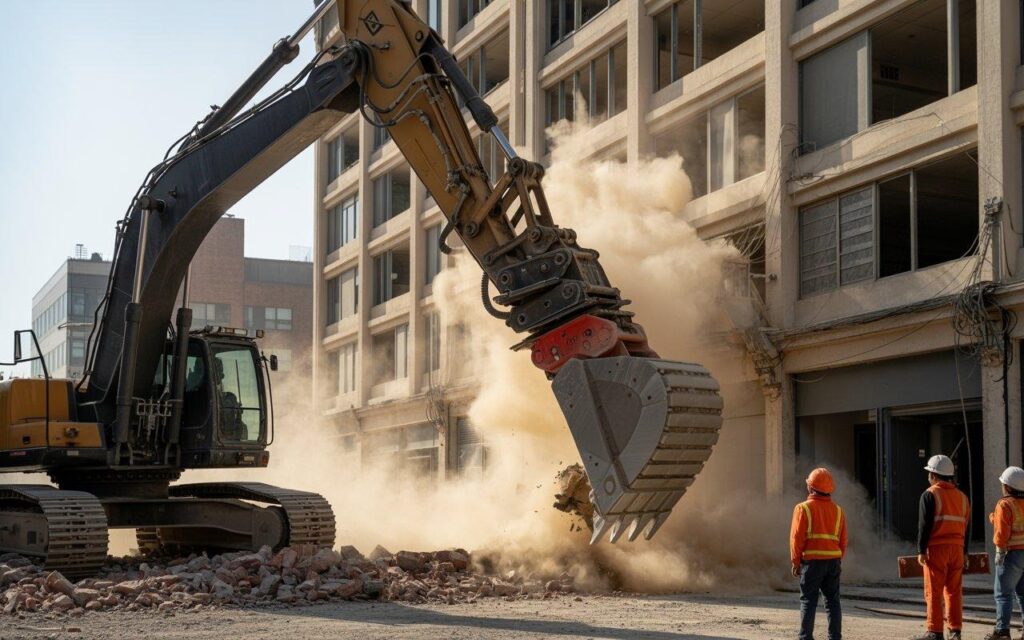
Sustainability in commercial demolition extends beyond regulatory compliance to encompass waste reduction, material recovery, and environmental stewardship.
Waste Diversion and Recycling
Seattle’s construction and demolition waste comprises roughly 40% of the total waste stream. Responsible contractors achieve 70-90% waste diversion through:
Material separation: On-site sorting of concrete, metal, wood, and other materials enables recycling rather than landfill disposal. While labor-intensive, separation dramatically reduces disposal costs and environmental impact.
Concrete crushing: Seattle-area concrete recycling facilities crush demolition concrete into aggregate used for road base, new concrete, and drainage applications. This diverts massive volumes from landfills and reduces demand for virgin aggregate mining.
Metal recycling: Steel, aluminum, copper, and other metals have excellent scrap value. Complete recovery captures this value and prevents resource waste.
Wood recovery: Clean dimensional lumber can be reused. Wood unsuitable for reuse becomes mulch, animal bedding, or biomass fuel.
Brick and masonry: Historic brick in good condition has salvage value. Even damaged brick can be crushed for landscaping aggregate.
Green Demolition Certifications
Several certification programs recognize sustainable demolition practices:
LEED (Leadership in Energy and Environmental Design): While primarily a building certification, LEED awards credits for construction waste management and material reuse that apply to demolition.
Sustainable Sites Initiative: Recognizes projects that protect and enhance ecosystem services, including demolition projects that minimize environmental impact.
Living Building Challenge: The most rigorous green building standard, requiring demonstration that projects create positive environmental impact.
These certifications aren’t typically pursued for demolition-only projects but become relevant when demolition is the first phase of green building development.
Dust and Air Quality Management
Seattle’s air quality regulations protect public health and the environment:
Puget Sound Clean Air Agency requirements: Contractors must implement visible emission controls including water sprays, wind barriers, covering stockpiles, and limiting vehicle speeds. Violations trigger fines and stop-work orders.
Diesel emission reduction: Newer, cleaner equipment reduces diesel particulate emissions. Some contractors retrofit older equipment with diesel oxidation catalysts or particulate filters.
Dust monitoring: Large projects may require real-time dust monitoring to ensure compliance and protect neighbors.
Stormwater Protection
Construction sites are major sources of stormwater pollution. Seattle requirements include:
Erosion and sediment control: Silt fences, inlet protection, stabilized construction entrances, and other measures prevent sediment from leaving the site and entering storm drains.
Pollution prevention: Contractors must prevent fuel, oil, concrete washout, and other pollutants from contacting stormwater.
Post-construction stormwater management: For projects involving significant soil disturbance, new development stormwater requirements may apply even after demolition, affecting how you prepare the site for future use.
The Future of Commercial Demolition in Seattle
Seattle’s commercial demolition landscape continues evolving in response to regulatory changes, technology advances, and market forces.
Regulatory Trends
Expect continued tightening of environmental regulations:
Expanded hazardous material requirements: Proposals to broaden regulated materials beyond asbestos and lead to include additional substances.
Stricter waste diversion mandates: Seattle may implement mandatory diversion rates for commercial demolition waste.
Carbon accounting: Future regulations may require tracking and reporting embodied carbon in demolished materials and incentivize reuse over recycling or disposal.
Historic preservation expansion: Seattle’s historic preservation program continues expanding, potentially affecting more properties and extending timelines.
Technology and Innovation
Technology is transforming demolition:
Building Information Modeling (BIM) for demolition: 3D models of existing structures help contractors plan optimal demolition sequences, identify hazards, and estimate quantities more accurately.
Remote-controlled and robotic demolition: Specialized robots can perform demolition in confined spaces or hazardous environments, improving safety and precision.
Advanced material sorting: Mobile sorting equipment and AI-powered material identification systems improve on-site waste separation, increasing recycling rates.
About Prime Demolition
Prime Demolition brings decades of commercial demolition experience to Seattle property owners and developers. Our licensed, insured teams specialize in complex urban demolition projects throughout King County, combining technical expertise, regulatory knowledge, and commitment to safety and environmental stewardship.
From small retail teardowns to large-scale commercial structure removal, we handle every aspect of demolition: environmental surveys, permit acquisition, hazardous material coordination, structural demolition, debris removal and recycling, and site preparation—delivered on schedule and within budget.
Our Seattle-based team understands local regulations, maintains established relationships with city agencies and utility providers, and employs best practices that protect adjacent properties and maintain positive neighbor relations throughout project execution.
For commercial demolition services backed by experience, licensing, insurance, and proven results, contact Prime Demolition to discuss your project needs.