











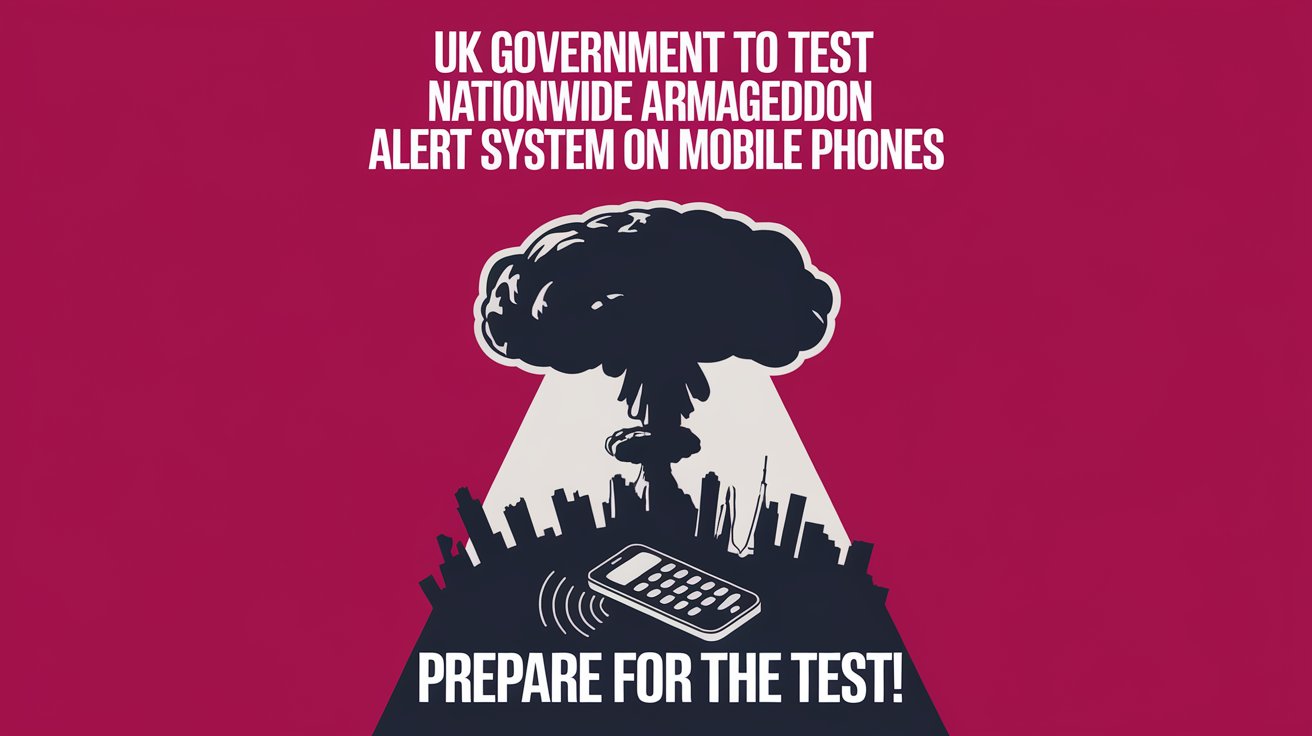
Imagine sitting in a café, your phone suddenly vibrates, a loud siren blasts for ten seconds and a message flashes across the screen telling you it’s a test. That’s the basic idea behind the government drill now heading to every compatible smartphone in the country.
Yes—the headline sounds dramatic. But the official name is the Emergency Alerts system, and the government is planning a national test on 7 September 2025 at around 3:00pm BST. This test aims to check the system, remind people what an emergency alert looks like, and help save lives when real danger strikes.
What exactly is being tested?
Bold fact: The UK will send a national test message to compatible 4G and 5G phones and tablets across the country. Phones will vibrate and sound a siren for roughly 10 seconds, even if your device is on silent, and display a short message (in English and Welsh) clearly stating it’s a test and that no action is needed.
Question: Why the loud siren — won’t that panic people?
Answer: The loud siren is deliberate. It’s designed to cut through ambient noise and get immediate attention for life-threatening emergencies (think major storms, floods, or large-scale incidents). Officials insist the test will be clearly labelled to avoid panic. The trade-off is stark: in real life, seconds matter — the siren helps buy those seconds.
Why now? — the short version
- The system launched in 2023 and the government wants to keep it reliable.
- The Emergency Alerts system has been used during serious weather events — for example, Storm Éowyn in January 2025, when about 4.5 million people received alerts in parts of Scotland and Northern Ireland. That scale showed the system works — but also why testing matters.
Question: Is this a response to recent crises or broader preparedness?
Answer: Both. Officials say the test supports wider resilience planning—ensuring public warning routes work during storms, industrial accidents, or other threats. It’s also part of learning from previous emergencies and recommendations to strengthen public safety systems.
What the alert will look and sound like
- Siren for ~10 seconds (overrides silent mode).
- Vibration and a pop-up message that’s short, clear and labelled “TEST”.
- The message will include a link to government guidance on how to prepare for real emergencies.
Real-life example: During Storm Éowyn, millions were told to stay indoors immediately. That simple instruction can cut casualties when roads flood or roofs become dangerous — the Emergency Alerts system is meant to deliver similarly urgent instructions.
Who will receive the test — and who won’t?
- Will receive it: Compatible 4G and 5G mobile phones and compatible tablets in the UK.
- Will not receive it: Phones not compatible with the system, devices turned off, or those not connected to a mobile network at that moment. The government does not need your phone number or location database to send the alerts — the system pushes to devices via network cell broadcast technology.
Question: What about people who rely on landlines, older phones, or have no phone at all?
Answer: The alerts are one part of a wider safety approach. Local authorities, community services and emergency broadcasters remain critical. MPs and ministers have discussed supplementary measures (leaflets, community outreach) to reach people without compatible devices.
Privacy and safety concerns — the honest answers
People often worry about surveillance or control when a message can literally override a phone. Here’s what the government says:
- The system does not track your location or store personal numbers to send alerts. It uses broadcast technology to reach devices in the affected area.
- The alerts are reserved for life-threatening situations — not for minor incidents or political use. That restriction is central to public trust.
Question: Could this system be misused?
Answer: The risk of misuse exists in any national tool, which is why clear rules, public oversight and limited use cases are emphasized. Transparency around when the system is triggered — and independent scrutiny — help keep it focused on safety.
Practical tips for the test day (and beyond)
- Expect a loud siren at ~3pm on 7 September 2025 — don’t be alarmed. It’s a test.
- If you’re driving or in a dangerous place, follow standard safety practice — pull over safely if you need to check your phone. News outlets will remind drivers about this ahead of the test.
- If you rely on someone else (elderly relatives, vulnerable neighbours), tell them the day and time so they don’t panic.
- Use the moment as a reminder to check your emergency kit (medicines, torch, radio) and household plan — the alert links to government advice for a reason.
What this test tells us about risk and readiness
Think of the Emergency Alerts system like a national smoke alarm: not something you want to hear often, but crucial when fire—or flood—strikes. Regular testing keeps the detectors working and reminds people what the sound means.
Question: Will the system make us safer in the long run?
Answer: Evidence suggests early warnings save lives. When a community knows how alerts sound and what they mean, it reduces confusion during real incidents and speeds up life-saving actions. The 2025 test is a practical step toward keeping that readiness alive.
Just like sudden floods or severe storms can cause chaos on land, unexpected disasters also strike at sea — such as the recent case where an $8 Million Yacht Capsized Near Annapolis, a shocking incident that shows how vital quick response and early alerts really are.
Where to read more (official sources)
- The government’s Emergency Alerts pages explain the test, legal framework and what devices are compatible: GOV.UK — National Emergency Alert test.
- Coverage and context for previous uses and the Storm Éowyn example: The Guardian and related news pieces.
Final takeaway
Yes, the headline UK Government To Test Nationwide Armageddon Alert System On Mobile Phones reads dramatic — that’s part of why people notice. But beneath the flourish is a clear public safety goal: test the Emergency Alerts system so it works when people truly need it. Expect the sound on 7 September 2025 around 3pm, and use the moment to check your own emergency plans.
While national alerts tackle life-threatening dangers, not all headlines are quite so serious — sometimes unusual stories capture attention for very different reasons, like the intriguing piece on Unusual Award N.13: Extreme Gluteal Proportions in African Woman – What It Really Means.”